In the highly competitive activewear market, fabric composition is the foundation of a successful product line. For activewear brands, yoga studios, and fitness apparel retailers, the stretch, recovery, and durability of garments directly impact customer satisfaction and brand reputation. At the core of these performance metrics is Spandex—often known by its premium brand name, Lycra.
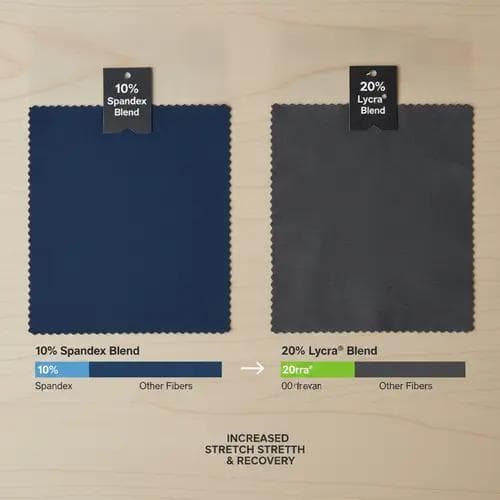
While most standard athletic wear contains around 10% to 15% Spandex, premium yoga wear often pushes this boundary to 20% or even higher. But as a brand owner or apparel buyer, you might wonder: does the higher cost of a 20% Lycra blend truly translate to a better product and higher profit margins?
This comprehensive guide explores the differences in Spandex content, analyzing when investing in 20% Lycra is worth the premium for your yoga wear and activewear collections.
Before comparing percentages, it is essential to understand what Spandex brings to the table. Spandex is a synthetic fiber known for its exceptional elasticity. It can stretch up to five to eight times its original length and snap back to its original shape without sagging or losing integrity.
In yoga wear, Spandex is typically blended with nylon or polyester. The base material provides moisture-wicking properties, softness, and breathability, while the Spandex delivers the necessary stretch. The exact percentage of Spandex determines the garment's compression level, flexibility, and longevity.
For years, the industry standard for general activewear has hovered between 10% and 15% Spandex. This composition is widely used in everyday leggings, sports bras, and workout tops.
Fabrics with 10% to 15% Spandex offer a comfortable, lightweight feel. They provide sufficient stretch for low to medium-impact activities such as walking, light jogging, or casual gym workouts. This blend is highly cost-effective, allowing brands to maintain lower production costs while still delivering a functional product.
While adequate for general use, this standard blend may fall short in high-performance scenarios. Over time, garments with lower Spandex content may experience "bagging" at the knees or a loss of shape around the waistband. Additionally, they may lack the firm compression required for high-intensity training or advanced yoga practices, and they are more susceptible to becoming sheer when stretched (the dreaded "squat test" failure).
When activewear brands aim to position themselves in the premium market, they frequently turn to fabrics containing 20% to 25% Lycra. This higher concentration transforms the garment's performance profile entirely.
At 20% Lycra, the fabric achieves superior four-way stretch. This means the garment moves seamlessly with the body in every direction, which is critical for complex yoga poses, Pilates, and gymnastics. More importantly, the recovery rate is exceptional. The leggings will retain their shape wash after wash, wear after wear, significantly extending the product's lifespan.
Higher Spandex content provides targeted compression. This gentle yet firm pressure supports muscles during exercise, improves blood circulation, and offers a flattering, sculpting effect that consumers highly desire. The fabric hugs the body securely, ensuring that waistbands do not roll down during downward-facing dog or high-intensity interval training.
One of the biggest pain points for activewear consumers is sheer fabric. A 20% Lycra blend, especially when paired with high-quality nylon, creates a denser, more opaque knit. This guarantees that the leggings remain 100% squat-proof, building immense trust between the consumer and your brand.
Upgrading to a 20% Lycra blend increases manufacturing costs, but for many B2B clients, the return on investment is substantial. Here is when the premium is justified:
1. Positioning as a Premium or Luxury BrandIf your brand targets high-end consumers who are willing to pay top dollar for quality, a 20% Lycra blend is non-negotiable. Premium buyers expect garments that sculpt, support, and last for years. Using high-Lycra fabrics allows you to command higher retail prices and achieve better profit margins.
2. Catering to Professional Athletes and Dedicated YogisYoga instructors, professional athletes, and daily gym-goers put their apparel through rigorous stress. They require gear that performs flawlessly under pressure. Offering 20% Lycra ensures your products meet the exacting standards of these power users, turning them into loyal brand advocates.
3. Reducing Return Rates and Increasing Customer Lifetime ValuePoor fit, loss of elasticity, and sheer fabrics are the leading causes of activewear returns. By investing in higher Spandex content, you significantly reduce product defect complaints. Satisfied customers are more likely to return for repeat purchases, ultimately lowering your customer acquisition costs.
Selecting the right fabric composition depends entirely on your target market and pricing strategy. For promotional items, entry-level retail, or fast-fashion activewear, a 10% to 15% Spandex blend is perfectly adequate.
However, if your goal is to build a reputable, long-lasting activewear brand known for performance and quality, the investment in 20% Lycra is strategically sound. It elevates the perceived value of your apparel and ensures your products stand out in a saturated market.
Are you ready to create a standout yoga wear collection that your customers will love? Whether you are looking to develop premium 20% Lycra leggings or cost-effective activewear lines, we are here to bring your vision to life. As a specialized B2B manufacturer, we offer comprehensive OEM/ODM services, custom yoga wear production, and end-to-end brand cooperation. From fabric sourcing and custom dyeing to private labeling and bulk manufacturing, we provide the expertise and quality control your brand needs to succeed. Contact us today to discuss your custom activewear project and request fabric samples!
1. What is the difference between Spandex, Lycra, and Elastane?Spandex and Elastane are generic terms for the same highly elastic synthetic fiber. Lycra is a premium, trademarked brand name of Spandex known for its superior quality, durability, and consistent stretch recovery.
2. Does a higher Spandex percentage make leggings hotter or less breathable?Not necessarily. While Spandex itself is not breathable, it is always blended with moisture-wicking base fibers like nylon or polyester. A high-quality 80% Nylon / 20% Lycra blend is engineered to remain highly breathable and cool to the touch, making it ideal for sweaty workouts.
3. Can I request custom fabric blends for my brand's yoga wear?Yes. As a professional OEM/ODM manufacturer, we can customize fabric compositions to meet your specific requirements. Whether you need a standard 85/15 blend or a premium 75/25 high-compression fabric, we can source and manufacture it for your collection.
4. How does 20% Lycra affect the sizing and fit of the garments?Fabrics with 20% Lycra offer high compression, which can make the garment feel snugger initially. However, because of the exceptional four-way stretch, it conforms perfectly to the wearer's body. We can assist you in adjusting your tech packs and sizing charts to accommodate high-compression fabrics.
5. Is 20% Lycra suitable for all types of activewear?While perfect for yoga pants, cycling shorts, and high-impact sports bras, 20% Lycra might be too compressive for loose-fitting garments like jogger pants or casual t-shirts. We recommend tailoring the Spandex content based on the specific function and desired drape of each garment.
Written by
Dayu
Ready to bring your
yoga brand to life?