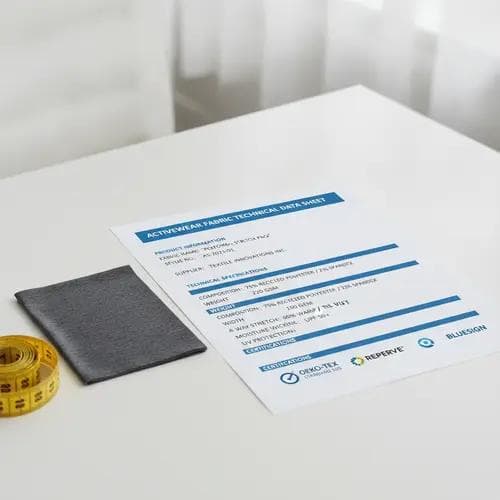
When sourcing materials for your activewear brand, the fabric technical data sheet (TDS) is your ultimate guide. For founders and product managers in the yoga wear industry, understanding this document is the difference between launching a best-selling legging and dealing with costly returns. A TDS provides the exact specifications of a textile, ensuring it meets your brand's standards for performance, durability, and comfort.
Whether you are developing a new line of buttery-soft sports bras or high-compression yoga pants, knowing how to interpret these metrics empowers you to make informed sourcing decisions. Here are the 12 key metrics on a fabric technical data sheet explained, specifically tailored for the activewear and yoga apparel market.
The composition tells you exactly what fibers make up the fabric, expressed in percentages. In the yoga wear sector, you will rarely see 100% of a single material. The gold standard is usually a blend of a synthetic base and an elastomeric fiber.
For example, a typical high-quality yoga legging might feature a composition of 75% Nylon and 25% Spandex. Nylon provides durability and a smooth hand feel, while the high percentage of Spandex ensures the garment moves with the body during complex asanas. Understanding composition helps you anticipate the fabric's basic characteristics before you even touch it.
GSM stands for Grams per Square Meter. It measures the density and thickness of the fabric. Choosing the right GSM is critical for yoga apparel to avoid the dreaded "sheer when bending" issue (often referred to as failing the squat test).
Fabric width indicates the usable width of the fabric roll, typically measured in inches or centimeters. The TDS often lists two numbers: the overall width and the cuttable width.
For apparel manufacturing, the cuttable width is the metric that matters. It dictates how your patterns will be laid out (the marker) and directly impacts your fabric yield and wastage. Maximizing cuttable width helps optimize your production costs during the OEM/ODM manufacturing process.
Stretch refers to how much the fabric can elongate, while recovery measures its ability to snap back to its original shape. For yoga wear, 4-way stretch (stretching both crosswise and lengthwise) is non-negotiable.
A premium technical data sheet will specify the stretch percentage (e.g., 100% horizontal stretch) and the recovery rate (e.g., 95% recovery after 1 minute). Poor recovery means your yoga pants will bag out at the knees and waist after a few wears, leading to negative customer reviews.
Color fastness evaluates how well the fabric retains its dye under various conditions. For activewear, the fabric must withstand intense environments. The TDS will grade color fastness on a scale (usually 1 to 5, with 5 being excellent) across several tests:
Pilling occurs when loose fibers tangle and form tiny balls on the fabric surface due to friction. Because yoga involves constant movement and friction against mats and the wearer's own body, pilling resistance is a major quality indicator.
Measured on a scale of 1 to 5, a score of 4 or 5 is highly recommended for premium yoga wear. A fabric with low pilling resistance will quickly look worn out, diminishing your brand's perceived value.
Dimensional stability measures how much the fabric will shrink or stretch after washing and drying. It is usually expressed as a percentage.
If a fabric has a shrinkage rate of -5%, a legging cut to a 28-inch inseam could lose over an inch in length after the first wash. For high-quality activewear brands, you should look for fabrics with a shrinkage rate of +/- 3% or less to ensure consistent sizing for your customers.
Yoga and fitness apparel must manage sweat efficiently. The TDS may include metrics on wicking (how fast moisture travels along the fabric) and drying time.
Technical fabrics often feature capillary action that pulls sweat away from the skin to the fabric's surface, where it can evaporate. If you are designing gear for hot yoga or high-intensity interval training, superior moisture-wicking metrics are essential for wearer comfort.
These metrics measure the fabric's durability under stress. Tensile strength refers to the force required to pull the fabric apart, while tear strength measures the force needed to continue a tear once it has started.
While yoga wear is generally knit (which stretches rather than tears), these strength metrics ensure the fabric can withstand the rigorous tension of tight-fitting silhouettes and active movements without popping seams or developing holes.
Ultraviolet Protection Factor (UPF) indicates how much UV radiation a fabric allows to reach the skin. If your brand offers outdoor activewear, paddleboard yoga gear, or summer collections, UPF is a strong selling point.
A UPF rating of 50+ blocks 98% of the sun's rays. This metric is increasingly common on the data sheets of premium performance textiles.
While hand feel is subjective, the TDS will specify any mechanical or chemical finishes applied to achieve it. Common finishes in the yoga wear industry include:
Knowing the finish helps you market the tactile experience of your garments accurately.
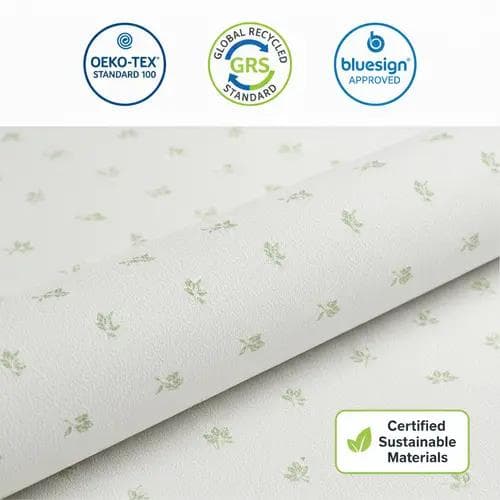
Modern consumers demand sustainability. A comprehensive technical data sheet will list relevant certifications. Look for standards like Oeko-Tex Standard 100 (ensuring the fabric is free from harmful chemicals), Global Recycled Standard (GRS) for recycled polyesters and nylons, or Bluesign.
Integrating certified eco-friendly fabrics into your supply chain is a powerful way to elevate your brand positioning in the competitive activewear market.
Understanding a fabric technical data sheet is the first step in creating exceptional apparel, but bringing your vision to life requires a reliable manufacturing partner. We specialize in premium yoga wear customization, offering comprehensive OEM and ODM services tailored to your brand's unique needs. From sourcing the perfect high-performance, squat-proof fabrics to precision pattern making and bulk production, our end-to-end brand services ensure your activewear meets the highest industry standards. Ready to scale your brand with superior quality? Contact us today to discuss your custom yoga wear project and discover how our manufacturing expertise can accelerate your business growth.
Q1: What is the best GSM for squat-proof yoga leggings?For fully opaque, squat-proof yoga leggings, a fabric weight between 220 GSM and 280 GSM is generally recommended. This density provides the necessary coverage and compression without compromising breathability or flexibility.
Q2: Why is 4-way stretch important for custom yoga wear?4-way stretch allows the fabric to expand both horizontally and vertically. This is crucial for yoga wear because it provides maximum freedom of movement, ensuring the garment moves seamlessly with the body during deep stretches and dynamic poses while maintaining its shape.
Q3: How can I ensure the fabric won't pill after a few wears?When reviewing the fabric technical data sheet, check the pilling resistance score. Look for a rating of 4 or 5 on the standard 1-to-5 scale. Additionally, choosing fabrics with tightly spun yarns and high-quality synthetic blends can significantly reduce pilling.
Q4: What does cuttable width mean for my production costs?Cuttable width is the actual usable area of the fabric roll, excluding the frayed or damaged edges (selvedge). A wider cuttable width allows for more efficient pattern placement (marker making), which reduces fabric waste and lowers the overall cost per garment during manufacturing.
Q5: Can I request specific fabric finishes for my OEM/ODM orders?Yes, working with a professional OEM/ODM partner allows you to customize fabric finishes. You can request specific treatments such as moisture-wicking, anti-bacterial, UPF protection, or a brushed/peached finish to achieve the exact performance and "buttery soft" hand feel your brand desires.
Written by
Dayu
Ready to bring your
yoga brand to life?