Yoga Apparel — Bottoms
Full-length
Leggings.
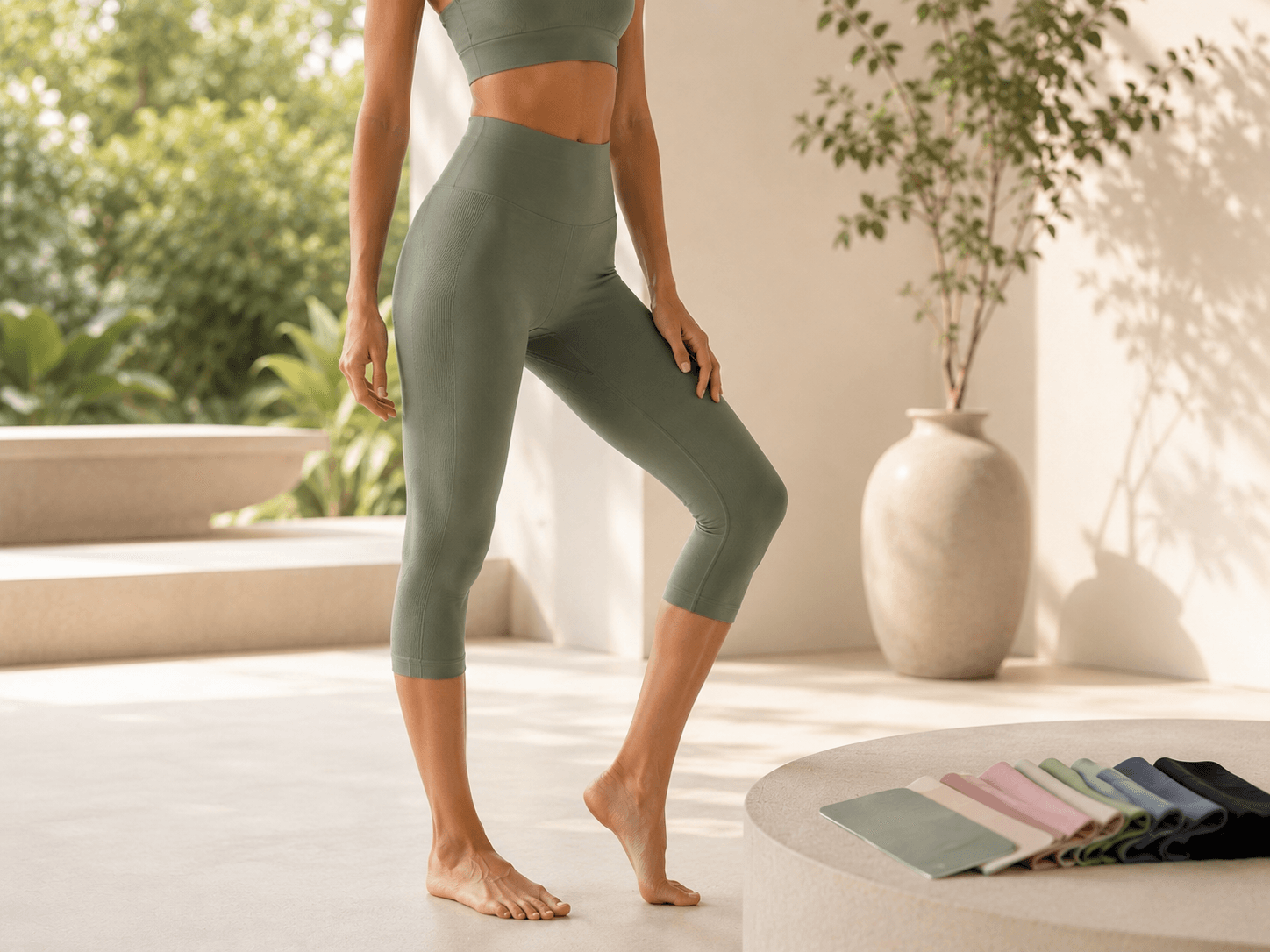
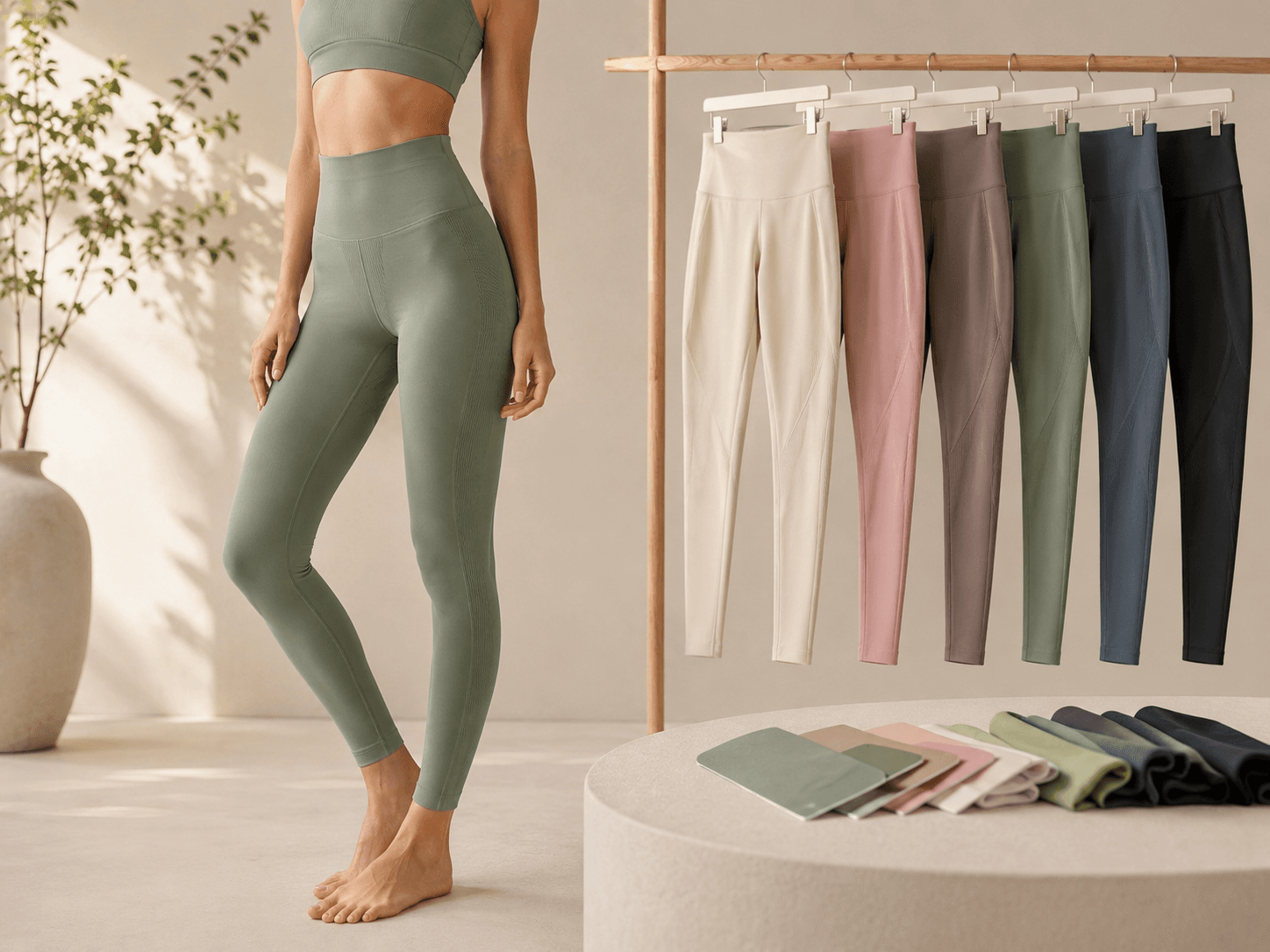
High-waist, 4-way stretch leggings built for performance and brand identity. You choose every detail — we produce it at scale.
MOQ
50 units
Lead Time
7–14 days
Technique
Custom print / dye
High-waist, 4-way stretch leggings built for performance and brand identity. You choose every detail — we produce it at scale.
The fabric you choose defines how your product feels, performs, and positions in the market. Use this guide to match your brand's identity and your customers' expectations.
The gold standard for premium yoga leggings. Nylon gives a luxurious surface sheen and excellent shape retention — leggings hold their form even after 100+ washes. If your brand is priced at $70+ per unit retail, this is your fabric. Comparable to what Lululemon Align uses.
The most widely used fabric in the activewear industry. More affordable than nylon, with excellent durability and colour vibrancy — especially for sublimation printing. Slightly less soft than nylon but holds compression well. Ideal for brands targeting the $30–60 retail range.
Made from regenerated ocean plastic and industrial waste. Performance is on par with virgin nylon, but your brand gains a powerful sustainability story. Increasingly important for brands targeting environmentally aware consumers. Certifications available upon request.
Bamboo fabric is naturally antibacterial and temperature-regulating — ideal for slow-flow or yin yoga where breathability matters more than compression. The softer drape gives a relaxed, lifestyle aesthetic rather than a performance look. Not recommended for high-sweat activities.
The most accessible option for customers who prefer natural fibres. Less technical than nylon or polyester — it absorbs moisture rather than wicking it, so it can feel heavy during intense workouts. Best suited for brands positioning leggings as everyday lifestyle pieces rather than performance gear.
The wrong print technique can ruin a great design — or add unnecessary cost. Here's a clear breakdown to help you decide.
Sublimation ink is permanently bonded into the fabric fibres — it cannot crack, peel or fade. The only limitation is fabric compatibility. If your design features complex patterns or gradients, this is the only technique that can reproduce them accurately.
Most cost-effective for large quantities with simple designs. Each colour requires a separate screen, so costs increase with colour count. The ink sits on top of the fabric, giving a slightly raised texture. Not ideal for intricate details or gradients.
Ideal for applying a detailed brand logo to a solid-colour garment. Best used for accent branding rather than full-coverage prints. The transfer can crack or peel over time if not cared for properly.
The most underrated option. A perfectly dyed, well-cut legging in a premium fabric needs no print to look expensive. This approach lets your brand identity come through woven labels, hang tags and packaging. Lowest cost, highest perceived quality when executed well.
Quote within 24 hours · NDA available · MOQ 50 units
Every batch goes through a rigorous multi-stage quality control process before it leaves our facility.
Share your fabric choice, print files, logo and quantity. We review and confirm within 24 hours.
A physical sample is produced and shipped to you for approval before any bulk run begins.
Once you approve the sample, we move to full bulk production with QC at every stage.
Packed and shipped to your door or warehouse. DDP and FOB options available.
Still have questions? Send us a message — we respond within 24 hours.