Starting a yoga wear brand is an exciting venture, but it comes with a unique set of challenges. One of the most significant hurdles for emerging brands is navigating the complex world of fabric sourcing. High-quality activewear requires specialized materials—moisture-wicking, four-way stretch, and durable blends—that often come with strict purchasing requirements. For startups, balancing the need for premium materials with limited capital can be daunting.
Understanding how to manage cash flow while dealing with Minimum Order Quantities (MOQs) is crucial for the survival and growth of your activewear business. In this guide, we will explore practical strategies for yoga fabric sourcing, helping you optimize your budget without compromising on quality.
In the textile manufacturing industry, suppliers set Minimum Order Quantities to ensure their production runs are cost-effective. For specialized yoga fabrics, such as nylon-spandex blends or eco-friendly recycled polyester, these MOQs can be exceptionally high.
When a startup is forced to purchase thousands of yards of a single fabric color or composition, a massive portion of their initial capital gets tied up in inventory. This creates a cash flow bottleneck, leaving less money for marketing, design development, and brand building. Furthermore, ordering large quantities of unproven styles increases the risk of dead stock if the market does not respond as expected.
To successfully launch and scale your yoga wear brand, you need sourcing strategies that protect your working capital. Here are several effective approaches:
Instead of selecting a different fabric for every single item in your collection, focus on a few highly versatile core fabrics. For example, a premium buttery-soft brushed fabric can be used for leggings, sports bras, and fitted tops. By pooling your yardage requirements into one or two main fabric types, you can reach the supplier's MOQ much faster while keeping your overall inventory investment low.
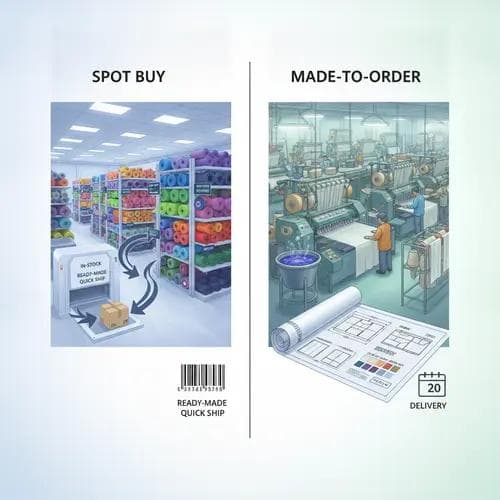
Many textile mills and manufacturers keep a running inventory of popular activewear fabrics in standard colors like black, navy, and charcoal. These are known as "stock fabrics" or "available-to-sell" inventory. Because the fabric is already produced, the MOQs are typically much lower than custom-milled options. Leveraging stock fabrics for your initial launch allows you to test the market with minimal financial risk before committing to custom colors or proprietary blends.
If you must commit to a large MOQ to secure a specific high-performance fabric, negotiate phased deliveries with your manufacturing partner. Instead of paying for and receiving the entire bulk order at once, see if the factory can hold the fabric and produce your garments in smaller, staggered batches. This approach spreads out your manufacturing costs over several months, easing the immediate burden on your cash flow.
One of the most effective ways for a startup to bypass the headaches of raw material sourcing is to partner with a comprehensive OEM (Original Equipment Manufacturer) or ODM (Original Design Manufacturer). Established manufacturers already have strong relationships with top-tier fabric mills. They often aggregate orders from multiple clients, allowing them to negotiate better prices and lower MOQs on premium yoga fabrics. Working with a specialized activewear manufacturer means you can access high-end materials without shouldering the massive volume requirements alone.
Managing cash flow in the early stages of your yoga brand dictates your long-term success. By making strategic decisions about fabric sourcing—whether through consolidating materials, utilizing stock options, or leveraging the buying power of an experienced manufacturing partner—you can maintain financial agility. This flexibility allows you to adapt to market trends, invest in customer acquisition, and scale your brand sustainably.
Navigating fabric sourcing, MOQs, and production logistics doesn't have to drain your resources. As a specialized B2B activewear manufacturer, we provide end-to-end OEM and ODM services tailored for yoga wear brands. From sourcing premium, high-performance fabrics with flexible MOQs to precision pattern making and bulk production, we are your trusted partner in building a successful brand.
Whether you are looking to customize your next collection, need reliable private label services, or want to explore innovative eco-friendly fabrics, our team is here to help you scale efficiently. Contact us today to discuss your custom yoga wear needs and discover how our brand cooperation services can optimize your supply chain.
1. What is a typical MOQ for custom yoga fabrics?MOQs for custom-milled activewear fabrics usually range from 1,000 to 3,000 yards per color, depending on the composition and the specific mill. However, partnering with an established OEM manufacturer can often give you access to lower minimums through their existing supply network.
2. How can I test my yoga wear designs without committing to large fabric orders?The best approach is to use stock fabrics or "in-stock" colors offered by your manufacturer. This allows you to produce smaller sample runs and initial inventory batches to test market demand before investing in custom-dyed materials.
3. What is the difference between OEM and ODM in yoga wear production?OEM (Original Equipment Manufacturer) means the factory produces garments based entirely on your specific designs and tech packs. ODM (Original Design Manufacturer) means the factory offers pre-designed, white-label styles that you can customize with your logo, colors, and minor modifications, which is often faster and requires less development cost.
4. Why is cash flow management so critical when sourcing activewear fabrics?Activewear fabrics require specialized knitting and dyeing processes, making them more expensive upfront. If too much capital is tied up in raw materials, startups may lack the funds needed for marketing, packaging, and operational expenses, which can stall business growth.
5. Can a manufacturer help me source sustainable or eco-friendly yoga fabrics?Yes. A specialized activewear manufacturer will have established connections with mills that produce recycled polyester, organic cotton, and sustainable nylon blends. They can source these materials efficiently and provide the necessary certifications to back up your brand's eco-friendly claims.
Written by
Dayu
Ready to bring your
yoga brand to life?