Spot Buy vs Made-to-Order Fabric: A Guide for Activewear Brands
July 10, 2026Dayu
In the highly competitive activewear and yoga apparel market, the quality and performance of your garments start with one foundational element: the fabric. For activewear brands, choosing the right fabric procurement strategy is a critical decision that impacts everything from production timelines to profit margins and brand identity. When sourcing materials for your yoga wear collections, you generally face two primary procurement methods: Spot Buy (purchasing in-stock fabrics) and Made-to-Order (custom-milled fabrics).
Understanding the differences between these two strategies is essential for optimizing your supply chain, managing cash flow, and delivering exceptional products to your customers. This comprehensive guide explores the nuances of Spot Buy and Made-to-Order fabric sourcing, helping you determine the best approach for your activewear brand.
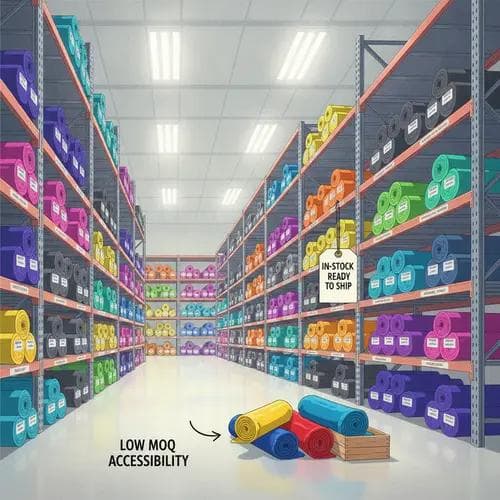
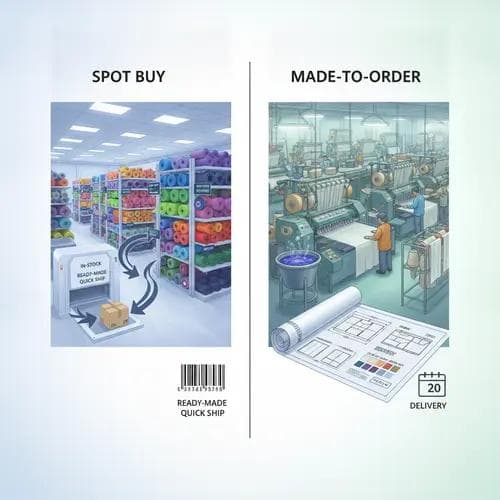
Spot Buy, often referred to as sourcing "in-stock" or "ready-made" fabrics, involves purchasing materials that a supplier has already manufactured and holds in their inventory. This strategy is highly popular among emerging brands and those looking to launch capsule collections rapidly.
The most significant advantage of Spot Buy procurement is speed. Because the fabric is already milled, dyed, and sitting in a warehouse, lead times are drastically reduced. Brands can move from design to production in a matter of weeks rather than months. This agility allows activewear companies to respond quickly to emerging market trends, such as a sudden demand for a specific color or texture in yoga leggings.
Furthermore, Spot Buy fabrics typically come with significantly lower Minimum Order Quantities (MOQs). This makes it an ideal choice for startups testing the market or established brands running limited-edition drops without committing substantial capital to inventory.
While speed and low MOQs are attractive, Spot Buy procurement comes with inherent limitations. The most prominent drawback is the lack of customization. Brands are restricted to the colors, weights, compositions, and performance treatments (like moisture-wicking or anti-microbial finishes) that the supplier currently has in stock. If your brand identity relies on a highly specific Pantone shade or a proprietary four-way stretch blend, Spot Buy will likely fall short.
Additionally, continuity can be a challenge. Once an in-stock fabric sells out, there is no guarantee the supplier will restock the exact same material, making it difficult to maintain consistency for core, evergreen yoga wear products.
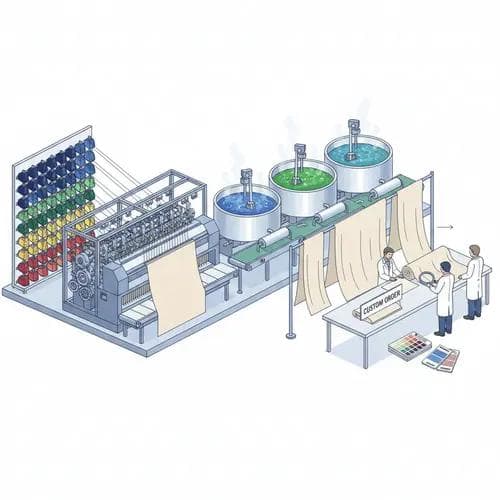
Made-to-Order fabric procurement involves commissioning a textile mill to knit, dye, and finish fabrics according to your exact specifications. This bespoke approach is the gold standard for established activewear brands and those prioritizing unique product differentiation.
The primary benefit of Made-to-Order sourcing is absolute control. When creating premium yoga wear, the precise blend of nylon and spandex, the exact degree of compression, and the specific hand-feel are paramount. Made-to-Order allows you to engineer fabrics that align perfectly with your brand's performance standards. You can specify custom Pantone colors to ensure brand consistency across all collections and incorporate advanced performance treatments tailored to your target audience's needs.
Moreover, Made-to-Order guarantees continuity. As long as you meet the mill's requirements, you can reorder the exact same fabric season after season, ensuring that your best-selling yoga pants maintain the identical fit, feel, and performance that your customers expect.
The trade-offs for this level of customization are time and volume. Made-to-Order fabrics require comprehensive production cycles, including lab dips for color matching, knitting, dyeing, and finishing. This process typically adds several weeks to your overall production timeline, necessitating careful, long-term planning.
Additionally, textile mills require higher MOQs for custom production runs to ensure manufacturing efficiency. This demands a larger upfront financial investment, making it a riskier strategy for unproven styles or brands with limited cash flow.
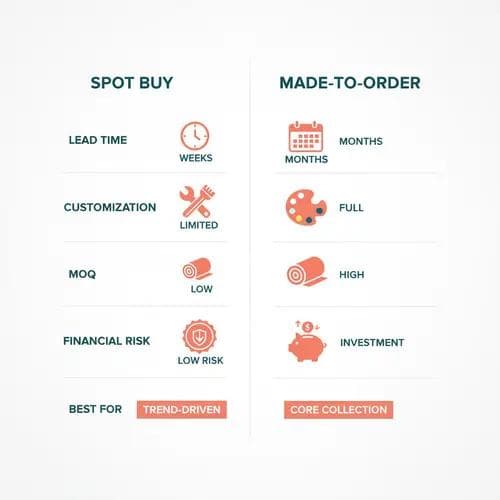
To make an informed decision for your activewear business, it is helpful to compare these strategies across key operational metrics.
Lead Time and Speed to MarketSpot Buy offers immediate availability, making it perfect for chasing fast-moving trends or bridging inventory gaps. Made-to-Order requires a longer lead time, typically ranging from four to eight weeks just for fabric production, requiring disciplined seasonal planning.
Customization and Brand IdentityIf your brand competes on unique fabric technology, custom colors, or specialized compression profiles for yoga wear, Made-to-Order is non-negotiable. Spot Buy limits you to generic market offerings, which can make it challenging to stand out in a crowded activewear landscape.
Financial Commitment and RiskSpot Buy mitigates financial risk through low MOQs, allowing brands to test new styles with minimal investment. Made-to-Order requires significant capital commitment due to high MOQs, making it better suited for proven, high-volume core products where demand is predictable.
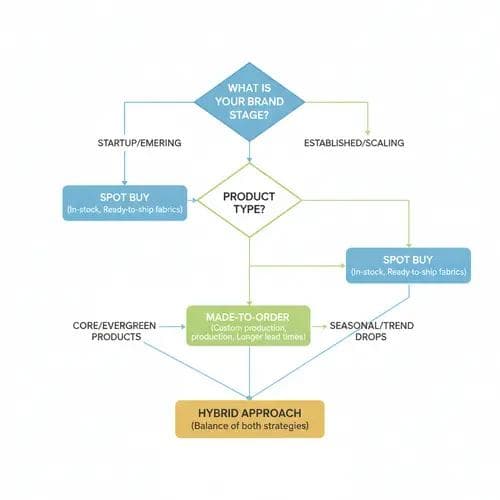
The optimal fabric procurement strategy often depends on your brand's current growth stage and specific product goals. Many successful activewear brands employ a hybrid approach.
For instance, a brand might use Made-to-Order fabrics for their core collection of essential yoga leggings and sports bras—products that generate consistent revenue and require strict quality and color continuity. Simultaneously, they might utilize Spot Buy fabrics for seasonal fashion drops, limited-edition prints, or testing new silhouettes, allowing them to remain agile and minimize inventory risk.
When evaluating your strategy, consider your cash flow, your production calendar, and the specific value proposition of your brand. If unique fabric performance is your primary selling point, investing in Made-to-Order is crucial. If speed and trend responsiveness drive your sales, Spot Buy will be your most valuable tool.
Choosing the right fabric is just the first step in building a successful activewear brand. Whether you require the agility of in-stock materials or the exclusivity of custom-milled fabrics, partnering with an experienced manufacturer is essential. We specialize in premium yoga wear customization, offering comprehensive OEM/ODM and brand collaboration services tailored to B2B clients. From sourcing the perfect performance fabrics to precision cutting, sewing, and quality control, our dedicated team ensures your activewear meets the highest industry standards. Ready to bring your vision to life and scale your brand? Contact us today to discuss your custom yoga wear production needs and discover how our manufacturing expertise can drive your business forward.
1. Can I use Spot Buy fabrics for my core yoga wear collection?While possible, it is generally not recommended for core collections. Spot Buy fabrics are subject to availability, meaning the exact color or blend might be discontinued by the supplier. For core items that require absolute consistency across multiple seasons, Made-to-Order is the safer, more reliable choice.
2. What is the typical Minimum Order Quantity (MOQ) difference between Spot Buy and Made-to-Order?Spot Buy fabrics can often be purchased by the single roll (typically 20 to 25 kilograms). In contrast, Made-to-Order fabrics usually require a much higher MOQ, frequently starting around 300 to 500 kilograms per color, depending on the specific mill and fabric composition.
3. How long does the Made-to-Order fabric process take?The timeline can vary based on the complexity of the fabric and the mill's current capacity. Generally, you should expect the process to take between 30 to 60 days. This includes the time needed for lab dips (color approval), knitting, dyeing, finishing, and final quality inspection.
4. Are Made-to-Order fabrics more expensive than Spot Buy fabrics?Not necessarily. While Made-to-Order requires a larger upfront investment due to higher MOQs, the per-yard or per-kilogram cost can sometimes be lower than Spot Buy because you are purchasing in bulk directly from the mill. However, custom performance treatments or highly specialized blends will increase the unit cost.
5. Can an OEM/ODM manufacturer help me source both Spot Buy and Made-to-Order fabrics?Yes. A reputable OEM/ODM partner with deep industry connections will have a robust network of fabric suppliers. They can help you navigate both procurement strategies, sourcing high-quality Spot Buy options for quick turnarounds and managing the complex Made-to-Order process for your custom requirements.
Written by
Dayu
Ready to bring your
yoga brand to life?