Finding the right yoga wear manufacturer in China can determine whether an activewear collection reaches the market with consistent fit, reliable performance, and a compelling brand identity. For founders, retailers, distributors, studios, and established apparel labels, the decision is no longer limited to finding a factory that can sew leggings. The right partner should be able to translate a commercial brief into wearable products, control quality across bulk production, and support the details that turn garments into a recognizable private-label collection.
China offers a mature ecosystem for custom yoga clothing, technical fabrics, seamless construction, cut-and-sew activewear, trims, packaging, and scalable supply-chain coordination. However, the word “best” should not be interpreted as a universal ranking. The best factory for a start-up testing a small capsule collection may not be the best choice for a retailer launching multiple size ranges, a studio creating branded uniforms, or a global label requiring sophisticated material development. The manufacturers below are therefore presented as an unranked B2B shortlist for initial evaluation.
A strong sourcing decision begins with the product brief, not the factory name. Define your target customer, product category, expected order volume, price architecture, material requirements, and brand assets before requesting quotations.
For a B2B buyer, a suitable Chinese yoga apparel supplier should demonstrate more than a product catalog. The most relevant capabilities include yoga-specific product coverage, private-label customization, OEM or ODM support, sample development, fabric and color options, quality-control procedures, and the ability to communicate clearly through the production cycle. Brand-stage fit also matters: some manufacturers are better suited to a focused capsule, while others are equipped for broader activewear assortments and more technical development work.

| Manufacturer | Core B2B Focus | Suitable Project Type | Strength to Assess During Inquiry ||---|---|---|---|| ZIYANG | Private-label yoga and activewear | Branded yoga collections with packaging needs | Product breadth, accessories, and branding details || Hucai Sportswear | Women’s activewear OEM/ODM | Coordinated multi-piece collections | Development collaboration and quality process || Ingor Sportswear | Yoga, gym, and fitness apparel | Multi-category activewear programs | Full-package customization and range expansion || Bloomto | Premium yoga and activewear | Performance-led or responsible-material collections | Fit consistency and material options || Ohsurewear | Flexible custom activewear | New brands and smaller project launches | Customization menu and MOQ suitability || Aktik Sportswear | One-stop private-label activewear | Structured custom development projects | Sampling, pre-production approval, and delivery workflow || Eation Wear | Yoga and sportswear manufacturing | Long-term international brand sourcing | Yoga apparel focus and supply-chain collaboration || AIKA Sportswear | Private-label sports and leisure apparel | Projects requiring design-to-delivery support | Sample development, print, label, and packaging services || Yotex Apparel | Functional activewear development | Technical yoga and performance apparel | Fabric, construction, and tech-pack execution || Santic | Full-service sportswear sourcing | Broader activewear or scale-oriented programs | Supply-chain coordination and OEM service scope |

ZIYANG is a China-based yoga and activewear manufacturer that positions its service around OEM, ODM, and private-label production. Its range covers both seamless and cut-and-sew styles, making it relevant for brands that want to combine sculpting leggings or seamless sets with sports bras, tops, jumpsuits, and layering pieces in one collection.
For B2B clients, its value lies in the breadth of brand-facing customization. In addition to garment development, the company presents options for customized accessories and packaging, including labels, hang tags, closures, pads, and eco-conscious packaging components. This can be useful for a brand that wants a more cohesive retail presentation rather than simply adding a logo to stock garments. During evaluation, buyers should request a fabric hand-feel comparison, size specification, sample workflow, and an itemized quotation for each trim and packaging element.

Hucai Sportswear focuses on women’s sportswear and presents dedicated pathways for both OEM and ODM activewear development. Its catalog is relevant to yoga brands seeking coordinated assortments such as leggings, sports bras, tank tops, crop tops, shorts, tracksuits, and light outerwear. This makes the supplier a practical candidate when the goal is a seasonally coordinated collection instead of one standalone yoga product.
The company emphasizes collaborative development, proprietary-brand customization, and quality-management steps. That positioning may suit buyers who need assistance refining the fit, fabric choice, color story, and product architecture before bulk production. Brands should ask how the supplier handles grading across size ranges, shade approval, stretch-and-recovery testing, and inspection standards for high-risk areas such as waistbands, seams, removable pads, and logo placement.

Ingor Sportswear serves the wider gym, fitness, and yoga apparel market, with products that include custom yoga bras, leggings, bodysuits, yoga tops, and broader training apparel. Its offer is especially relevant to brands that expect to expand beyond women’s yoga wear into men’s fitness styles, children’s sportswear, or adjacent performance categories.
The supplier describes an end-to-end approach that includes custom fabrics, colors, patterns, prints, silhouettes, logos, labels, and packaging. For a brand team, this can reduce the need to coordinate several separate vendors for product development and branded finishing. Buyers should still validate which elements are developed in-house, how fit approvals are recorded, and whether the factory can match the intended compression level, opacity, and recovery of the proposed yoga fabric across repeat orders.
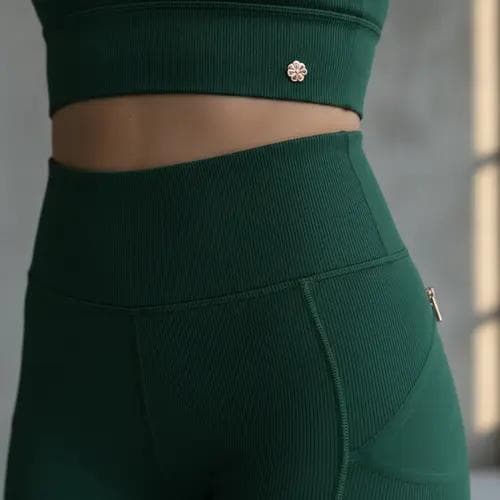
Bloomto is positioned as a premium yoga and activewear manufacturer for private-label OEM and ODM programs. It is a relevant option for brands that place high importance on repeatable fit blocks, functional construction, and a polished market-ready collection. Its product offering includes yoga bras, leggings, sets, tank tops, shorts, jackets, and jumpsuits.
An important consideration for sustainability-minded buyers is Bloomto’s stated availability of recycled-material options, including recycled nylon and recycled polyester. This may support an environmentally positioned yoga collection, but brands should always request the relevant transaction documentation and material verification for the exact fabric selected. In practical terms, buyers should evaluate whether the performance fabric maintains stretch recovery, soft hand-feel, color consistency, and opacity after wash testing rather than relying only on a sustainability claim.

Ohsurewear is an activewear manufacturer with a broad custom yoga wear offering that includes yoga sets, bras, tops, jackets, shorts, and leggings. It supports OEM, ODM, and private-label production, making it suitable for founders and growing brands that need flexibility while they refine a new collection.
A useful aspect of its service model is the ability to work from a detailed design file, reference image, or physical sample. Its published customization scope also includes fabrics, logo techniques, labels, hang tags, packaging, and accessories. For early-stage buyers, this can simplify the transition from an initial idea to a production-ready sample. However, lower entry quantities should never replace a clear commercial plan: confirm the MOQ by style, color, fabric, logo method, and size run before committing to development.

Aktik Sportswear provides a one-stop custom sportswear and private-label process. Its activewear range includes custom sports bras, fitness leggings, athletic tops, gym shorts, tracksuits, and other yoga-adjacent products. This structure can benefit B2B clients who prefer a mapped workflow rather than managing design, sample development, bulk production, and shipping as disconnected tasks.
The supplier describes a process that moves from design consultation and sample revision to pre-production approval, bulk manufacturing, inspection, and delivery support. That approach aligns well with brands that need strong visibility at each approval milestone. Buyers should make sure every project has a signed golden sample, approved size chart, color standard, logo placement file, carton-marking specification, and inspection checklist before bulk cutting begins.

Eation Wear is a Dongguan-based manufacturer that presents itself as a yoga apparel factory serving international brands. Its yoga and sportswear offering includes products such as yoga tops, workout shirts, and related activewear. It is a logical supplier to consider when a company wants a partner that specifically communicates around yoga apparel and long-term supply-chain cooperation.
The company’s messaging centers on combining craftsmanship and manufacturing capability for premium yoga products. For a prospective client, the most important next step is to determine how that positioning translates into the exact collection requirements: fabric sourcing, pattern adjustment, sample turnaround, inspection requirements, and capacity during peak seasons. Brands should send a concise but complete request-for-quotation package so the supplier can accurately assess both development complexity and bulk feasibility.

AIKA Sportswear is a private-label sports and leisure apparel manufacturer with women’s yoga products, sports bras, tracksuits, and outerwear in its range. It offers full-package services that extend from sample making and fabric production to sublimation, screen printing, labels, packaging, and delivery.
This integrated service scope is valuable for customers who need hands-on support from the concept stage onward. A brand with an early design direction but no finalized production specification can work with a full-package partner to turn mood boards and sketches into patterns, prototypes, and a clear bill of materials. Before placing an order, insist on approval checkpoints for silhouette, size grading, lab dips, artwork, wash testing, and final packaging so the bulk output remains aligned with the approved prototype.
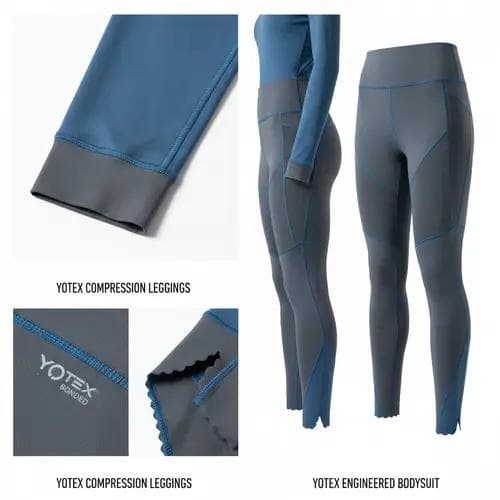
Yotex Apparel operates in functional activewear, with product and technical content that covers leggings, bodysuits, outerwear, and performance-oriented garment construction. It is worth considering for yoga and athleisure programs where fabric behavior and production engineering are as important as surface styling.
The supplier highlights areas such as nylon activewear performance, anti-pilling approaches, eco-conscious materials, tech-pack-to-bulk workflows, stitching, bonding, and laser cutting. That technical orientation can be beneficial for brands developing premium yoga wear with bonded hems, laser-cut details, smooth seams, compression zones, or elevated fabric specifications. Buyers should share intended use cases—such as hot yoga, studio flow, Pilates, travel, or gym-to-street wear—so the development team can propose the appropriate fabric weight, construction, and support level.

Santic provides broader sportswear sourcing, OEM, ODM, and private-label services. Although its public positioning reaches beyond yoga-specific manufacturing, it can be a viable candidate for activewear buyers with wider product-development requirements and a need for supply-chain coordination from concept through brand presentation.
Its OEM framework covers material selection, accessories, colors, patterns, construction, printing, embroidery, and custom packaging. This breadth can be advantageous for businesses developing an activewear range that combines yoga apparel with cycling, athleisure, tennis, or other categories. Because the supplier’s remit is broad, buyers should confirm the factory’s most relevant yoga apparel references, desired fabric expertise, size-grading capability, and line allocation for the project before making it a core yoga wear partner.
Selecting a manufacturer is a commercial and technical decision. A polished website or a low quotation is not enough. Buyers should compare suppliers against the specifications that protect the end customer’s experience: fabric opacity, stretch recovery, pilling resistance, colorfastness, seam durability, fit consistency, and comfort during movement. Equally important are operational factors such as communication speed, sample accuracy, MOQ structure, capacity, lead times, payment terms, and willingness to correct non-conforming goods.
| Evaluation Area | Questions to Ask a Potential Supplier | Why It Matters for Yoga Wear ||---|---|---|| Fabric performance | What is the fiber composition, weight, stretch, recovery, and wash-test result? | Yoga garments must remain opaque, soft, supportive, and shape-retentive in motion. || Fit and grading | Can you develop a base fit and grade it across my target size range? | A flattering sample in one size does not guarantee consistent fit in every size. || Sample process | How many revisions are included, and what is the approval sequence? | Clear sample control prevents costly bulk-production misunderstandings. || MOQ and price | What is the MOQ by style, color, fabric, logo method, and size range? | The true order threshold often changes when custom elements are added. || Branding | Which logo, label, tag, and packaging options are available? | Brand details affect perceived value, retail readiness, and customer recognition. || Quality control | What inspection steps, defect classifications, and reporting procedures are used? | Yoga wear is sensitive to seam, print, shade, and opacity inconsistencies. || Lead time | What are the timelines for development, material booking, bulk production, and shipping? | A realistic critical path helps align product drops with marketing calendars. || Sustainability claims | Can you provide documentation for the exact material and production claim? | Evidence is necessary before making responsible-sourcing statements to customers. |
The best way to obtain accurate quotations and useful development feedback is to send a complete project brief. At minimum, include product sketches or reference images, target fabric composition, expected product functions, size range, colorway count, branding artwork, packaging preferences, target quantities, expected delivery date, and target market. If your brand does not yet have a full tech pack, a strong manufacturing partner can help structure the specifications, but the client should still define the product’s commercial purpose and target price point.
For OEM yoga wear, the brand supplies the design direction and seeks a factory capable of manufacturing it accurately. For ODM yoga wear, the manufacturer provides existing or adaptable silhouettes that can be tailored through fabric, color, branding, and selected design changes. Private-label production is often the fastest path to market when the core silhouette already meets the brand’s quality and positioning requirements. The right route depends on how much differentiation, development time, and intellectual-property control the business needs.
Whether you are launching a first capsule, improving an existing activewear line, or expanding into new global markets, our team can help turn your concept into a commercial collection. We provide custom yoga wear development, OEM/ODM manufacturing, private-label solutions, brand identity support, packaging coordination, and long-term brand collaboration services tailored to your market positioning and order strategy.
Share your product idea, target customer, preferred styles, expected quantities, and timeline. We will help you evaluate the most suitable development route, select materials and construction details, create production-ready samples, and build a yoga wear collection that reflects your brand—not a generic catalog. Contact us today to discuss your custom yoga apparel, OEM/ODM, or brand partnership project.
OEM, or Original Equipment Manufacturing, means the factory produces yoga clothing based on your own product specifications, designs, tech packs, materials, and branding requirements. ODM, or Original Design Manufacturing, begins with styles developed by the manufacturer; the buyer then adapts elements such as fabric, color, logo, labels, and packaging. OEM usually provides greater product differentiation, while ODM can reduce development time and initial complexity.
A productive inquiry should include product images or sketches, intended garment category, target fabric composition, colorways, size range, logo artwork, packaging requirements, estimated quantity, preferred delivery date, and sales market. If you have a tech pack, include it. If not, provide clear reference images and describe the target fit, compression level, functional features, and retail price range so the supplier can recommend an appropriate development path.
MOQ varies by supplier and by the degree of customization. A stock or lightly customized private-label style may be available at a lower volume than a fully custom OEM design. The final MOQ can also change according to the number of colors, fabric type, logo process, labels, packaging, and size distribution. Always request a written breakdown for the exact style configuration rather than assuming that one stated MOQ applies to every product.
Begin with physical fabric swatches and a development sample. Evaluate opacity during stretch, hand-feel, recovery after wear, seam comfort, color accuracy, logo adhesion, and wash performance. Before approving bulk production, confirm a pre-production sample that matches the final fabric, color, trims, labels, and packaging. You should also agree on inspection criteria, acceptable defect levels, measurement tolerances, and corrective-action procedures in writing.
Yes. Many activewear manufacturers can source recycled synthetics, organic fibers, or other lower-impact material options. However, sustainability claims must be tied to the exact material and production route selected for your order. Ask for applicable documentation, specify the claim you plan to make in your marketing, and validate that performance requirements—such as softness, opacity, stretch, and durability—are maintained alongside the preferred material choice.
Written by
Dayu
Ready to bring your
yoga brand to life?