Meta Title: Why Startup Yoga Brands Fail: Branding Mistakes to Avoid
Meta Description: Discover why startup yoga brands fail and learn how to avoid common positioning, product, manufacturing, and marketing mistakes when building a yoga apparel business.
Launching a yoga apparel brand can look deceptively simple. The market is visually appealing, the audience is engaged, and social media makes it possible to reach potential customers without opening a physical store. Yet many startup yoga brands struggle to build momentum, even when their leggings, sports bras, or matching sets appear competitive at first glance.
The problem is rarely a lack of enthusiasm. More often, a new brand fails because its identity, products, supply chain, and customer experience do not support the same clear promise. A polished logo cannot compensate for inconsistent sizing. Attractive campaign images cannot solve weak product differentiation. A low unit price cannot protect a brand from late deliveries, quality complaints, or inventory that customers do not want.
For founders entering the yoga wear market, branding should not be treated as a design task that happens after product development. It should guide decisions about the target customer, collection structure, fabric, fit, color, customization, packaging, pricing, and manufacturing partner. Understanding the most common yoga brand mistakes can help startups build a more credible and commercially sustainable foundation.
A startup yoga brand must earn trust in a category where customers are highly sensitive to comfort, fit, opacity, support, fabric feel, and visual style. Buyers may discover a brand through an image, but they judge it through the complete product experience. If leggings roll down during movement, light colors become transparent, seams irritate the skin, or sizing varies between styles, the brand promise quickly loses credibility.
At the same time, startups usually operate with limited budgets, small teams, and uncertain demand. This makes every product decision more important. Too many styles can create inventory pressure, while too few meaningful differences can make the brand forgettable. Over-customization can increase development costs, but generic private-label products may fail to create a distinctive position.
The strongest emerging brands connect three elements from the beginning: a recognizable market position, products designed for a specific customer, and an operational model capable of delivering consistent quality. When one of these elements is missing, growth becomes difficult to sustain.
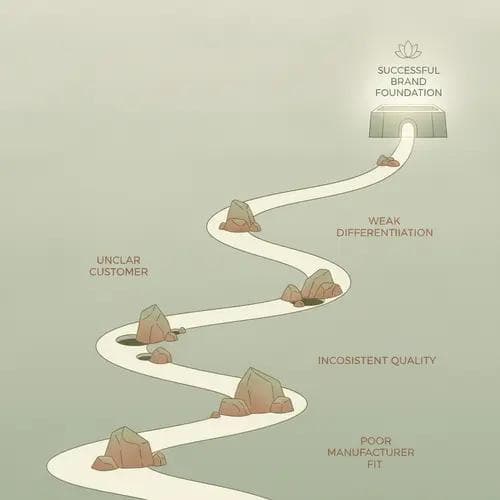
One of the most common branding mistakes is trying to create yoga wear for everyone. A startup may describe its audience as “women who love fitness,” but that group is too broad to guide product development or communication. A customer who wants soft apparel for restorative yoga has different expectations from someone who needs compressive leggings for hot yoga, Pilates, strength training, or all-day athleisure.
A clear customer profile should influence more than advertising. It should shape fabric weight, stretch recovery, support level, waistband construction, inseam options, color direction, pocket placement, size range, price, and even packaging. If a brand claims to serve studio-focused yogis but launches mainly high-compression gym products, the disconnect weakens its identity.
Before developing a collection, founders should define the customer’s primary activity, lifestyle, purchasing priorities, preferred aesthetic, common fit concerns, and acceptable price range. A focused brand may reach a smaller audience initially, but it is more likely to feel relevant and memorable.
New yoga brands often reduce perceived risk by copying bestselling silhouettes, popular color palettes, or the visual language of larger companies. This may produce a collection that looks familiar, but it rarely gives customers a reason to switch.
Competitor research is useful when it reveals market expectations and unmet needs. It becomes harmful when imitation replaces strategy. A startup does not need to invent an entirely new category, but it should offer a clear point of difference. That difference might be a specialized fit, inclusive grading, understated studio wear, maternity-friendly construction, petite or tall sizing, lower-impact materials, distinctive color development, or versatile pieces designed for both practice and daily use.
The key question is not simply, “Will this product sell?” It is, “Why should this product come from our brand?” If the answer is only a lower price or a different logo, the brand is vulnerable to competitors that can manufacture faster, advertise more aggressively, or discount more deeply.
A logo is an identifier, not a complete brand. Customers experience a yoga apparel brand through product quality, fit consistency, photography, tone of voice, labels, packaging, customer support, delivery, and post-purchase care. If those touchpoints feel disconnected, a professional logo will not create lasting trust.
For example, a brand may use refined, minimalist visuals but deliver products in inconsistent packaging with unclear care instructions. Another may promote premium performance but use fabric that pills quickly or loses shape. In both cases, the operational experience contradicts the visual promise.
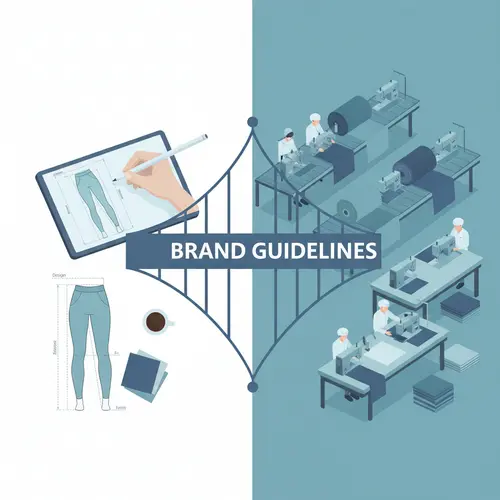
A useful brand system should define the company’s positioning, product principles, visual direction, communication style, quality expectations, and customer experience standards. These guidelines can then be shared with designers, marketers, photographers, packaging suppliers, and the yoga wear manufacturer. This alignment becomes especially important as the brand expands its collection or works with multiple external partners.
A large first collection may look impressive, but it can create unnecessary financial and operational risk. Every additional style, color, and size increases the number of stock keeping units the business must develop, inspect, photograph, market, store, and sell.
For a startup with limited demand data, a focused capsule collection is often more strategic. A hero legging, coordinating sports bra, versatile top, and one layering piece can communicate a stronger story than a broad assortment of unrelated products. The initial range should be large enough to demonstrate the brand concept but controlled enough to protect cash flow and simplify quality management.
A disciplined launch also creates better learning. When the collection is focused, founders can more easily identify which fits, fabrics, colors, and price points customers prefer. Those insights can guide restocks, color extensions, and future custom yoga wear development.
| Launch Decision | Higher-Risk Approach | More Strategic Startup Approach ||---|---|---|| Product range | Many unrelated styles | A focused capsule built around hero products || Color strategy | Numerous trend colors | Core colors plus a limited seasonal accent || Customization | Complex details on every item | Distinctive features concentrated where they add value || Inventory | Large quantities based on assumptions | Controlled quantities supported by testing and forecasts || Brand story | Different message for each product | One consistent promise across the collection |
Yoga wear must perform, not merely photograph well. Founders sometimes select products from samples or catalogs based on color and silhouette without testing how they behave during movement. This can lead to leggings that slip, waistbands that fold, bras that lack appropriate support, or pale fabrics that become sheer when stretched.
Product evaluation should reflect the intended use. A yoga apparel startup should test stretch, recovery, opacity, moisture management, seam comfort, wash performance, colorfastness, pilling resistance, and fit across relevant body types. It should also consider whether the fabric and construction match the brand’s positioning. A soft, brushed fabric may suit a comfort-led studio collection, while a smoother and more compressive material may be more appropriate for higher-intensity movement.
Wear testing is particularly important before bulk production. Internal fitting alone may not reveal how a garment performs during repeated practice, washing, and daily use. Structured feedback from testers can expose problems early, when pattern, fabric, or construction changes are still manageable.
Fit is one of the strongest drivers of trust in apparel. When customers find a legging or sports bra that works for them, they expect the next purchase in the same size to feel familiar. Inconsistent sizing increases returns, weakens reviews, and makes online shopping feel risky.
Startups should avoid treating size charts as a final administrative detail. Measurements, grade rules, fabric stretch, elastic tension, seam construction, and style intent all affect the final fit. Even two products using the same nominal size range may feel different if their materials have different compression or recovery characteristics.
A reliable development process should include measurement specifications, fit samples, size-set review when appropriate, and clear tolerances for production. Founders should also communicate honestly about whether a product is designed for compression, a second-skin feel, or a relaxed fit. Clear fit guidance supports the customer while reducing uncertainty at purchase.
Unit cost matters, but the lowest quotation may not create the lowest total risk. A supplier that lacks experience with stretch fabrics, flatlock seams, bonding, removable cups, elastic recovery, or activewear quality control can create expensive problems later. Delays, inconsistent colors, incorrect measurements, weak stitching, and high defect rates can consume the savings from a lower price.
A suitable yoga clothing manufacturer should be evaluated on product specialization, development capability, communication, sampling process, quality control, customization options, production capacity, lead times, and willingness to support the brand’s stage of growth. Startups should also clarify minimum order quantities, sample charges, fabric availability, color minimums, packaging options, inspection standards, payment terms, and the process for handling production issues.
The right manufacturing partner should not simply accept an order. It should help translate a brand concept into commercially producible garments. For businesses that need original styles, an OEM or ODM yoga wear partner can support decisions around materials, patterns, construction, branding details, and collection development. This collaboration is especially valuable when founders have a strong market vision but limited technical apparel experience.
Customization can build differentiation, but excessive complexity at the beginning can increase sample rounds, minimum quantities, production time, and cost. Unique hardware, multiple fabric combinations, intricate seam lines, uncommon dye colors, and highly specialized packaging may look valuable individually, yet together they can make the first launch difficult to manage.
A smarter approach is to decide which custom elements matter most to the customer and the brand story. A signature waistband, carefully developed color palette, flattering seam placement, recognizable back detail, or consistent logo application may provide enough distinction without overengineering the entire garment.
Startups can also use a phased development model. The first collection can combine proven constructions with selected brand-specific details. As demand becomes clearer, the company can invest in more exclusive fabrics, proprietary patterns, advanced construction, or fully custom yoga apparel. Customization should support a validated competitive advantage, not compensate for an unclear one.
Fabric is central to the identity of a yoga wear brand. Customers notice hand feel, stretch, compression, breathability, surface appearance, and how a garment changes after washing. If the material differs noticeably between production runs, the brand may struggle to deliver a consistent experience.
Color also requires careful control. A digital color reference can appear different on an actual textile, and the same shade may vary across fabric types or production batches. This matters when a brand sells matching sets. A sports bra and legging described as the same color should look coordinated when worn together.
Founders should establish approval procedures for fabric, lab dips or color standards, pre-production samples, and bulk quality checks. They should also confirm how replacements or repeat orders will be managed if the original fabric or dye lot is no longer available. These details may feel technical, but they directly affect how customers perceive the brand.
Trends can attract attention, but a brand built entirely around current colors, viral silhouettes, or social media aesthetics may lose relevance quickly. Trend-driven inventory is also risky because product development and production take time. By the time a collection launches, the market may already be moving toward a different look.
Strong yoga brands use trends selectively. They maintain recognizable core products and introduce seasonal updates through color, texture, prints, or limited-edition details. This balance creates continuity while keeping the assortment fresh.
A founder should be able to describe what remains consistent even when trends change. It may be the brand’s fit philosophy, minimalist styling, technical performance, inclusive approach, fabric feel, or focus on a particular yoga lifestyle. That enduring idea is the foundation of brand equity.
Pricing below established competitors can seem like an efficient way to enter the market. However, a low-price strategy leaves little room for product development, quality control, content, customer service, returns, and future growth. It can also conflict with claims of premium fabric, ethical production, advanced construction, or personalized brand experience.
Customers do not assess price in isolation. They consider perceived value. A new brand can justify its position through reliable fit, thoughtful design, distinctive specialization, useful product education, responsive service, quality packaging, and a clear reason for existing.
Pricing should be developed alongside product cost, logistics, duties where applicable, packaging, marketing, sales channels, expected returns, promotions, and wholesale requirements. If the business may later sell through studios, retailers, or distributors, the original pricing model should leave enough margin for those partnerships.
A startup may describe itself as sustainable in one campaign, performance-led in another, and luxury-focused somewhere else. Each message may sound attractive, but together they create confusion. Customers should not have to interpret what the brand stands for.
Consistency does not require repeating the same sentence everywhere. It means every message supports the same central position. Product descriptions, social posts, email campaigns, packaging copy, wholesale materials, and founder storytelling should reinforce a shared promise.
Claims should also be specific and supportable. Instead of relying on broad terms such as “premium,” “eco-friendly,” or “high performance,” brands should explain what those ideas mean in the actual product. Clear information about material qualities, construction, intended activity, fit, care, and design purpose is more persuasive than generic marketing language.
Packaging and garment trims are not separate from branding. A customer forms an impression through the hangtag, care label, size label, logo application, folding method, protective bag, shipping package, and unboxing experience. These elements should feel appropriate to the brand’s price and positioning.
The goal is not necessarily elaborate packaging. Excessive materials may be costly and inconsistent with a brand that promotes simplicity or reduced waste. Instead, the objective is a coherent and functional presentation. Labels should be readable and comfortable, care instructions should be accurate, and packaging should protect the garment while expressing the brand identity.
For B2B yoga apparel projects, packaging requirements should be discussed during product development rather than after production. Logo techniques, label placement, hangtag attachment, barcode needs, folding, individual packing, and carton specifications can affect timelines and cost.
Quality control should not begin when finished products arrive at the warehouse. It should be built into material approval, sample review, pre-production confirmation, in-line production checks, and final inspection.
A practical quality standard should cover measurements, workmanship, stitching, seam strength, fabric defects, shade variation, logo placement, labels, packaging, and product cleanliness. The brand and manufacturer should agree on specifications and acceptable tolerances before bulk production begins.
Startups sometimes hesitate to define detailed standards because they lack technical expertise. This is precisely why working with an experienced custom yoga wear manufacturer or OEM/ODM partner can be valuable. A capable partner can help establish development checkpoints, identify production risks, and communicate realistic solutions before problems become expensive.
Strong pre-launch marketing can create demand, but it can also magnify operational weaknesses. If a campaign performs well and the brand cannot deliver consistent products on time, early excitement may turn into cancellations, complaints, and negative reviews.
Before committing to a launch date, founders should confirm sample approval, material availability, production capacity, quality expectations, packaging readiness, shipping time, and contingency plans. Marketing, production, and inventory decisions should be coordinated rather than managed as separate activities.
It is also useful to prepare customer-facing information before launch. Size guidance, product care, material descriptions, support level, model measurements, shipping expectations, and return procedures can reduce confusion and improve purchase confidence.
Avoiding failure does not require a perfect first collection. It requires a disciplined process in which the brand learns without exposing itself to unnecessary risk. Founders should begin with a specific customer, a clear product promise, and a focused assortment. They should validate fit and performance, choose manufacturing partners based on capability rather than price alone, and build quality control into every stage.
The brand strategy and product strategy must support each other. If the brand promises effortless comfort, the fabric, fit, and construction should deliver it. If it promises technical performance, product testing and specifications must justify that position. If it promotes thoughtful simplicity, the collection, packaging, and communication should feel equally considered.
The following principles provide a practical starting point:
A strong yoga brand is built when positioning, product design, manufacturing, and customer experience work together. If you are developing a new collection or improving an existing line, the right production partner can help you move from an idea to a consistent, market-ready product range.
We support B2B clients with custom yoga wear, private-label development, OEM/ODM manufacturing, fabric and color selection, pattern and sample development, logo and label customization, packaging, and broader brand collaboration services. Whether you are preparing a focused startup launch, expanding a successful core collection, or creating exclusive products for a studio, retailer, or fitness brand, we can help structure the development process around your positioning, quality requirements, target price, and order needs.
Contact us to discuss your custom yoga apparel project, OEM/ODM requirements, or long-term brand partnership. Together, we can develop yoga wear that looks distinctive, performs reliably, and supports sustainable business growth.
The biggest mistake is usually launching without a clearly defined target customer and product promise. When a brand tries to serve everyone, its products, messaging, and visual identity often become generic. A focused audience helps guide decisions about fit, fabric, function, style, price, and marketing.
There is no universal number, but a focused capsule is generally easier to manage than a large first collection. Many startups benefit from launching a few coordinated hero products, such as leggings, a sports bra, a top, and a layering piece. The right range depends on budget, minimum order quantities, sales channels, and customer needs.
Private label can suit brands that want a faster launch using existing product options with customized branding. OEM is appropriate when the brand provides specific designs or technical requirements for production. ODM can be valuable when the brand needs support with design development, fabrics, patterns, and construction. The best model depends on the desired level of originality, budget, timeline, and internal product expertise.
Startups can reduce risk by defining specifications clearly, approving fabrics and colors, reviewing fit samples, conducting wear and wash tests, confirming pre-production samples, and establishing inspection standards before bulk manufacturing. Working with a manufacturer experienced in yoga and activewear construction also helps identify potential issues earlier.
A startup should evaluate activewear specialization, sampling capability, fabric sourcing, pattern and fit support, customization options, minimum order quantities, communication, lead times, quality-control procedures, and production capacity. The ideal partner should understand both the technical requirements of stretch apparel and the commercial realities of building a growing brand.
Written by
Dayu
Ready to bring your
yoga brand to life?