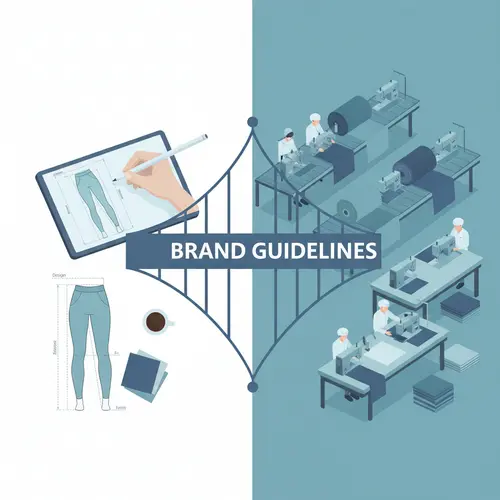
Building a successful activewear brand requires more than just a stunning logo and an inspiring mission statement. When it comes time to turn your vision into tangible products, the gap between creative design and factory execution can become a significant hurdle. Many brands struggle because their brand guidelines are built for marketing teams, not for manufacturers.
For businesses in the yoga wear and activewear industry, where precision in fit, fabric, and color is non-negotiable, having manufacturing-friendly brand guidelines is essential. This guide will walk you through how to create brand guidelines that your manufacturing partners can actually follow, ensuring your products meet your exact standards every single time.

Traditional brand guidelines often focus heavily on brand voice, typography for web design, and abstract visual concepts. While these are crucial for your marketing strategy, they offer little practical value to a factory floor manager or a pattern maker.
When brand guidelines lack technical specifications, manufacturers are forced to make assumptions. In the world of custom yoga wear, an assumption about fabric stretch, seam placement, or color matching can lead to an entire batch of unsellable inventory. The key to successful production is translating your brand's aesthetic into technical, measurable instructions.
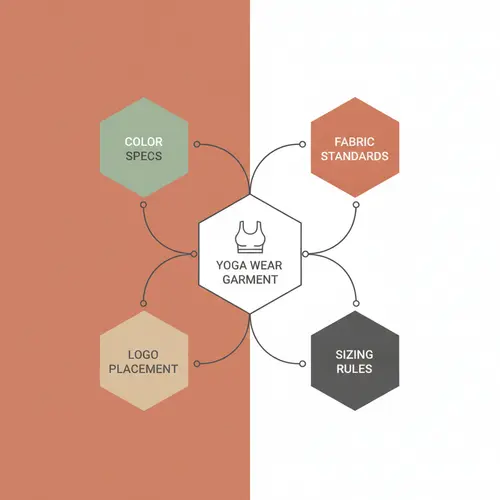
To ensure your manufacturer understands your brand exactly as you do, your guidelines must include concrete, technical details. Here are the critical components you need to include:
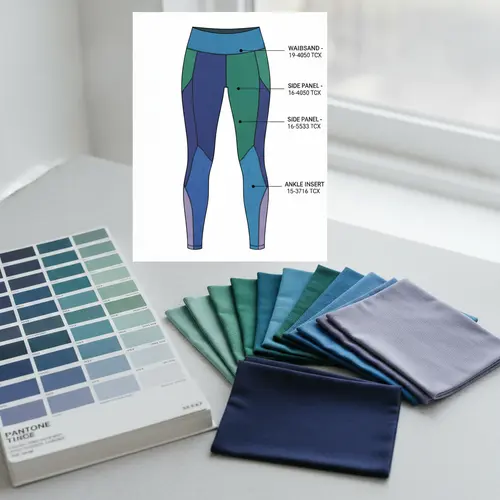
Saying your brand color is "ocean blue" is not enough for a factory. Different fabrics absorb dyes differently, and lighting can drastically alter how a color appears.
For apparel manufacturing, you must provide specific Pantone Matching System (PMS) codes or standard color references for textiles (such as Pantone TCX or TPX). If your yoga leggings feature a specific color-blocking pattern, clearly map out which exact color code applies to which panel.
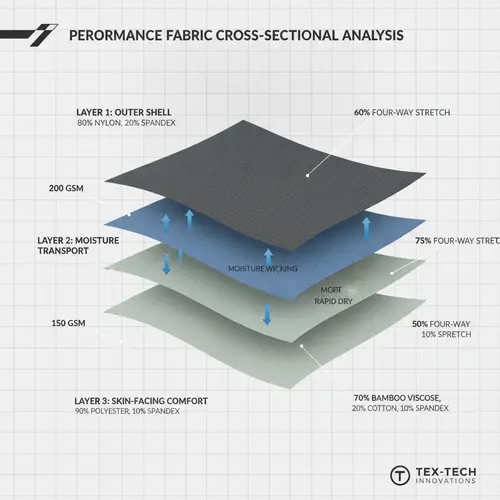
In activewear, the fabric is the foundation of the product. Your brand guidelines should detail the exact material compositions you require.
Instead of requesting "stretchy and soft fabric," specify the exact blend, such as 80% Nylon and 20% Spandex. Detail the required fabric weight (GSM), the level of four-way stretch, moisture-wicking properties, and any specific finishing treatments (like peaching for a buttery-soft feel). Clear material standards prevent manufacturers from substituting inferior fabrics that compromise your brand's quality.
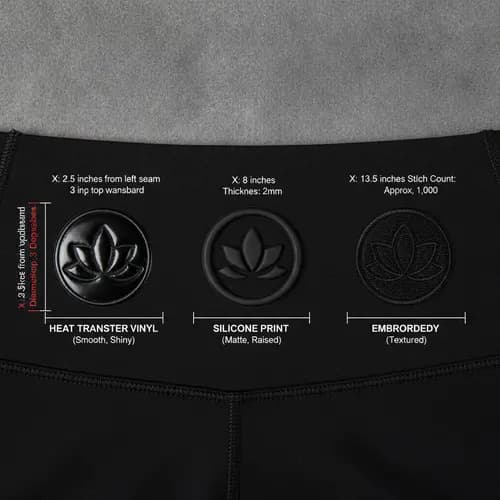
Your logo is the visual anchor of your brand, and its application must be consistent across all garments.
Your guidelines should specify the exact dimensions of the logo for different garment sizes. Furthermore, detail the preferred application method. For high-performance yoga wear, will you use heat transfer vinyl, silicone printing, or embroidery? Provide precise measurements for placement, such as "center back, exactly 2 inches below the neckline seam."
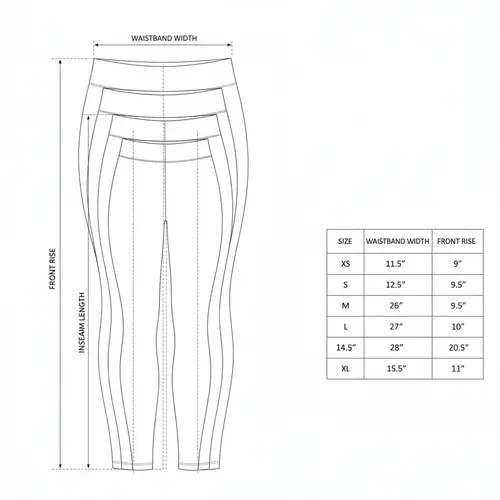
Fit is arguably the most critical aspect of custom yoga wear. Your brand guidelines should establish a standardized sizing chart and clear grading rules (how measurements change from one size to the next).
Include detailed technical drawings and measurements for key points of measure, such as the waistband width, inseam length, and front rise. Consistency in sizing builds customer trust and reduces return rates.
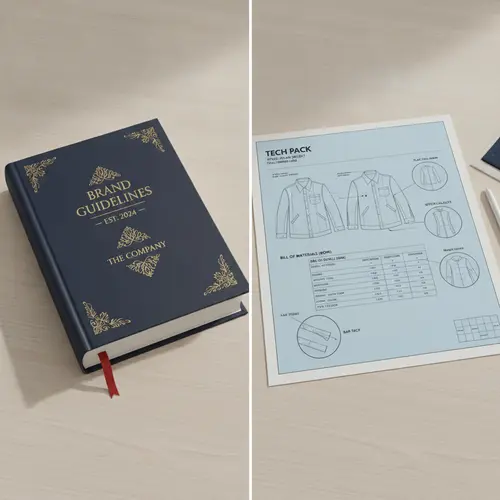
While brand guidelines provide the overarching rules, Tech Packs (Technical Packages) are the specific blueprints for each individual product.
Think of your brand guidelines as the constitution, and the tech pack as the specific law for a new garment. A robust tech pack incorporates the rules from your brand guidelines and applies them to a specific design, including flat sketches, bill of materials (BOM), and construction details like stitch types (e.g., flatlock seams for yoga pants to prevent chafing).
Even with the best guidelines, successful manufacturing requires open communication. Treat your manufacturer as a partner rather than just a vendor. Share your brand guidelines early in the relationship, ask for their technical feedback, and be willing to adjust based on their production expertise. A reliable manufacturer will appreciate the clarity and use it to deliver superior results.
Ready to Bring Your Activewear Vision to Life?
Translating your brand vision into premium, market-ready products requires a manufacturing partner who understands both design and technical execution. Whether you are launching a new line of custom yoga wear or scaling your existing brand, we are here to help. We specialize in high-quality OEM/ODM manufacturing and comprehensive brand collaboration services tailored for the activewear industry. From fabric sourcing and tech pack development to precision manufacturing, we ensure your brand guidelines are executed flawlessly. Contact us today to discuss your custom yoga wear needs and elevate your brand's production quality.
1. What is the difference between brand guidelines and a tech pack?Brand guidelines outline the overarching visual and technical standards for your entire brand, such as standard brand colors, logo usage, and general fabric quality requirements. A tech pack is a specific blueprint for a single product, detailing the exact measurements, materials, and construction methods needed to manufacture that specific item.
2. Why is Pantone color matching so important in apparel manufacturing?Pantone provides a universal language for color. Using specific Pantone codes (like TCX for textiles) ensures that the factory dyes your fabric to the exact shade you envisioned, eliminating the guesswork and inconsistencies that arise from using generic color names or digital screen references.
3. Can a manufacturer help me create technical brand guidelines if I only have a design concept?Yes, experienced OEM/ODM manufacturers often offer brand collaboration and technical design services. They can help translate your creative concepts into practical, manufacturing-friendly guidelines, advising on the best fabrics, construction techniques, and standard sizing for your target market.
4. What are the best logo application methods for custom yoga wear?For activewear, which requires high stretch and frequent washing, heat transfer (heat seal) and silicone printing are often the best choices. They stretch with the fabric without cracking and do not irritate the skin, unlike heavy embroidery which can cause chafing during workouts.
5. How do I ensure my sizing remains consistent across different manufacturing runs?Consistent sizing is achieved by establishing strict grading rules in your brand guidelines and providing detailed point-of-measure (POM) charts in your tech packs. Working with a reliable manufacturing partner who conducts rigorous quality control checks against these specific measurements during production is also crucial.
Written by
Dayu
Ready to bring your
yoga brand to life?