Building a successful yoga brand requires more than attractive products, a memorable logo, or a polished social media presence. Customers increasingly want to understand what a brand represents, how it makes decisions, and whether its products align with their priorities. This is why clearly defined yoga brand core values and a focused mission statement are essential.
For yoga apparel businesses, these elements have a practical role as well as an emotional one. They can influence product design, fabric selection, sizing, packaging, supplier relationships, marketing language, customer service, and long-term brand partnerships. When your values and mission are specific enough to guide those decisions, they become part of your operating strategy rather than empty slogans.
This guide explains how to define authentic core values and write a strong yoga brand mission statement. It also shows how to connect your brand purpose with real product-development choices, including custom yoga wear, private-label manufacturing, and OEM/ODM collaboration.
Core values and mission statements are closely related, but they serve different purposes.
Core values are the principles that guide how your yoga brand behaves, makes decisions, develops products, and builds relationships.
A mission statement explains what your brand does, who it serves, how it creates value, and why that work matters.
A brand may value inclusivity, responsible production, functional design, mindful living, transparency, or community. Its mission statement then brings those principles together in a concise description of the business it is building.
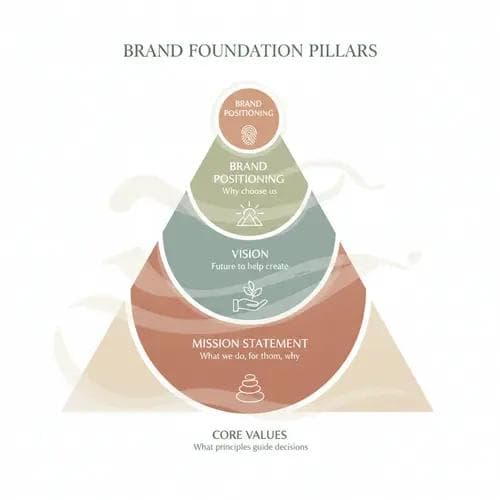
| Brand Foundation | Primary Question | Practical Role ||---|---|---|| Core values | What principles will guide our decisions? | Establish standards for products, operations, communication, and partnerships || Mission statement | What do we do, for whom, and why? | Clarify the brand’s current purpose and customer promise || Vision | What future do we want to help create? | Provide long-term direction and ambition || Brand positioning | Why should the target customer choose us? | Differentiate the brand within a specific market |
When these elements align, your business becomes easier to understand. Customers receive a more consistent experience, employees and partners know what the brand expects, and product decisions become more focused. For a yoga clothing brand, this consistency can be visible in everything from waistband construction and fabric performance to labeling, packaging, photography, and after-sales service.
Before choosing polished words, identify the original reason your brand should exist. Avoid beginning with general statements such as “we love yoga” or “we want to sell high-quality activewear.” These ideas may be true, but they are too broad to provide strategic direction.
Instead, consider the specific change you want your brand to create. Perhaps you want to help yoga practitioners move with confidence in apparel designed for different body types. You may want to offer studio owners a cohesive private-label collection that strengthens their community identity. Your goal could be to combine technical performance with understated aesthetics, or to make responsible material choices more accessible to emerging wellness brands.
A useful purpose statement often emerges from four questions:
Your answers do not need to sound like marketing copy. At this stage, clarity matters more than style.
A mission statement becomes stronger when it is written for a defined audience. A yoga brand that serves boutique studios will make different choices from a direct-to-consumer label focused on high-performance hot yoga apparel. Likewise, a minimalist premium brand may prioritize timeless design and refined materials, while a community-led label may emphasize accessibility, representation, and shared practice.
Create a concise customer profile that includes your audience’s practice habits, lifestyle, purchasing priorities, preferred price range, common fit concerns, and expectations regarding materials or production. For a B2B yoga apparel brand, the customer profile should also consider the needs of buyers, distributors, studios, retreat organizers, and wellness companies.
Ask what your ideal customer should immediately understand about your brand. Do you want to be known for sculpting performance wear, inclusive sizing, versatile studio-to-street pieces, low-impact materials, dependable wholesale supply, or distinctive custom collections? Your core values should reinforce that desired position.
Many brands use appealing words such as “quality,” “community,” “sustainability,” and “innovation.” These terms can be useful, but only when they have a clear meaning inside the business. A genuine core value must be specific enough to influence action.
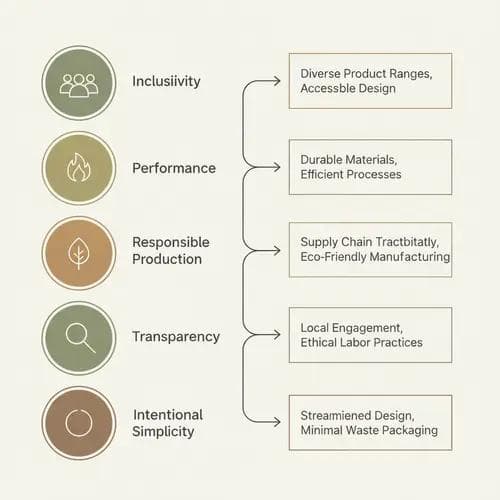
For example, if inclusivity is a core value, it might affect the size range, fit-testing process, model selection, product imagery, color options, and accessibility of customer communication. If responsible production is a core value, it may influence material sourcing, order planning, packaging, production quantities, factory standards, and how openly the brand communicates limitations and progress.
Use the following test when evaluating a possible value:
| Evaluation Question | What a Strong Answer Looks Like ||---|---|| Does this value matter to our target customer? | It addresses a real customer priority rather than a passing slogan || Does it reflect how we intend to operate? | It can be translated into standards, processes, or behaviors || Can it guide a difficult decision? | It helps the team choose between competing options || Can customers experience it? | It is visible in products, service, communication, or partnerships || Is it distinctive in our specific context? | The brand defines the value in its own meaningful way |

Aim for three to five core values. Too many values can weaken focus and make implementation difficult.
Once you have shortlisted your values, define what each one means for your yoga brand. A short explanation should connect the principle to observable behavior.
This value might mean designing yoga apparel that supports movement without unnecessary complexity. Product implications could include squat-resistant fabric, four-way stretch, stable waistbands, flat seams, breathable panels, and fit testing across relevant poses.
For one brand, inclusivity may mean offering a broad size range and testing garments on multiple body shapes. For another, it may include modest silhouettes, adjustable features, adaptive design considerations, or imagery that represents a wider community of practitioners.
A new brand may not be able to create a perfect supply chain immediately. “Responsible progress” can be more credible than making absolute claims. It may involve setting measurable priorities for preferred fabrics, recyclable or reduced packaging, production planning, traceability, and product durability.
This is particularly relevant for brands working with manufacturers, studios, retailers, and distributors. It can translate into clear communication, realistic timelines, transparent specifications, documented approvals, consistent quality control, and mutual respect throughout product development.
Intentional design means every feature has a purpose. Instead of adding details simply to follow trends, the brand considers how a neckline, pocket, strap, seam, waistband, or fabric weight affects movement, comfort, appearance, and manufacturing feasibility.
These examples are not a required list. Choose values that genuinely fit your audience, capabilities, and desired market position.
Values become credible when they shape the physical product. This is especially important in yoga apparel, where customers directly experience fabric, fit, coverage, support, stitching, and comfort.
| Core Value | Possible Product and Supply-Chain Applications ||---|---|| Inclusivity | Broader sizing, diverse fit models, adjustable elements, considered color range, accessible product descriptions || Performance | Movement-based fit testing, technical fabrics, secure waistbands, supportive construction, durability checks || Responsible production | Preferred material options, thoughtful order quantities, reduced packaging, quality designed for longer use || Transparency | Accurate fabric descriptions, clear care guidance, documented specifications, realistic production communication || Community | Studio collaborations, instructor feedback, member testing, co-branded capsules, community-focused launches || Intentional simplicity | Versatile silhouettes, cohesive color systems, fewer unnecessary trims, repeatable core styles |
This step is also valuable when selecting a custom yoga wear manufacturer. Your production partner should understand not only what you want to make, but why particular features matter to your brand. A detailed brand brief can help an OEM/ODM partner recommend suitable fabrics, construction methods, logo applications, labeling solutions, packaging options, and quality standards.
For example, a brand centered on high-performance hot yoga should communicate priorities such as moisture management, breathability, coverage, recovery, and secure fit. A lifestyle-focused yoga label may place greater emphasis on hand feel, drape, refined colors, comfort, and styling versatility. A brand committed to inclusivity may require a more extensive fit-development process and careful grading across sizes.
Founders should lead the brand’s direction, but they do not need to define it in isolation. Insight from customers, instructors, studio owners, employees, sales partners, and manufacturing specialists can reveal where the brand creates meaningful value.
Review customer comments, product returns, fit feedback, repeated questions, wholesale inquiries, and conversations with your community. Look for patterns. Customers may consistently appreciate that your leggings stay in place, that your designs transition easily beyond the studio, or that your service feels unusually personal. These patterns can help identify values that already exist in practice.
Manufacturing conversations can also sharpen your mission. A capable supplier may help you understand the trade-offs among fabric composition, garment structure, target price, minimum order quantity, lead time, customization level, and performance expectations. This practical knowledge helps ensure that your stated values are achievable within your business model.
After defining your audience, purpose, values, and product approach, you can write the mission statement. A useful first draft should answer four questions:
A practical formula is:
We create [product or service] for [target audience] through [distinct approach], so they can [meaningful outcome].
For example:
We create thoughtfully engineered yoga apparel for modern practitioners, combining movement-focused design, inclusive fit development, and responsible production choices so more people can practice with comfort and confidence.
A studio-focused private-label brand might use a different version:
We help yoga studios and wellness communities build distinctive apparel collections through flexible customization, dependable production, and purposeful design that strengthens connection beyond the practice space.
These examples are intentionally specific. They clarify the audience, offering, method, and desired impact without trying to describe every aspect of the business.
A mission statement should be easy to understand. Avoid complicated corporate language, exaggerated promises, and vague expressions that could apply to almost any company.
Strong mission statements usually share several qualities. They use direct language, focus on the present purpose of the business, reflect real capabilities, connect with a defined customer, and provide enough direction to guide decisions. They are also concise enough for employees, partners, and customers to remember.
During revision, remove words that do not add meaning. Replace broad claims with more precise language. “Empowering everyone everywhere” may sound ambitious, but “helping yoga practitioners move with comfort and confidence” gives the brand a clearer role.
Test the statement against real scenarios. Would it help you decide whether to launch a new product category? Would it influence the choice between a trend-driven fabric and a more suitable performance material? Would it help you evaluate a potential retail or manufacturing partner? If the statement never affects a decision, it may still be too generic.
For a yoga apparel brand, the mission must be supported by product development and production. This is where a strong manufacturing partnership becomes strategically important.
In an OEM arrangement, your brand typically provides the design direction, specifications, or tech packs, while the manufacturer produces the garments according to those requirements. This approach can suit brands with an established product concept and internal design capability.
In an ODM arrangement, the manufacturer may contribute more actively to product development by offering existing styles, design support, fabric recommendations, pattern solutions, or customization options. This can help emerging brands, studios, and wellness companies develop a collection more efficiently.
Neither model automatically guarantees alignment with your values. The key is to translate your brand principles into a clear product brief. That brief may include:
If your mission emphasizes premium performance, your specifications must reflect that promise. If your values prioritize accessibility, the collection architecture and target costs should support an attainable retail price. If your brand focuses on refined minimalism, fabric selection, seam placement, branding scale, and color consistency deserve particular attention.
Publishing your values is only the beginning. They should be integrated into the way your business works.
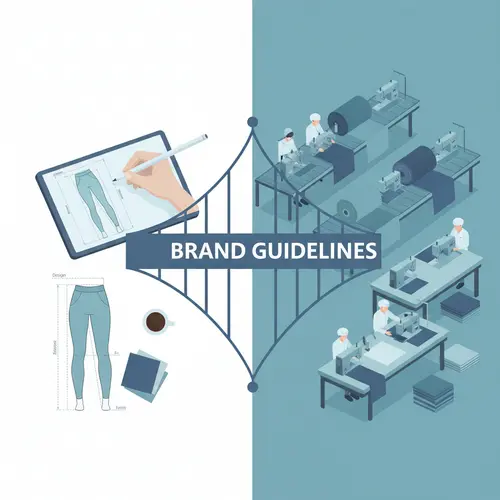
Start by creating a simple internal brand guide. For each value, explain what it means, what it does not mean, how it appears in the customer experience, and how it affects product development. This guide can support employees, freelance designers, marketing agencies, photographers, wholesale partners, and manufacturers.
Your values can also become checkpoints in product reviews. Before approving a sample, ask whether it delivers the comfort, coverage, fit, durability, or visual identity your brand promises. Before confirming packaging, review whether the materials and presentation support your stated priorities. Before launching a campaign, check whether the language and imagery represent your intended community accurately.
Consistency does not mean the brand can never evolve. It means changes should be intentional and connected to a clear purpose.
A value should reflect a real commitment. If you select terms only because competitors use them, your brand language will feel interchangeable and may create expectations your operations cannot support.
Customers experience your values through the garment. A brand cannot credibly emphasize performance if its products have inconsistent fit or inadequate movement testing. It cannot rely on quality as a differentiator without clear standards for fabric, stitching, construction, and inspection.
Trying to serve everyone usually produces weak positioning. A narrower mission can create stronger relevance and still allow the business to grow.
Your mission should guide assortment planning, design, sourcing, pricing, collaboration, service, and marketing. If it appears only on an “About” page, it is not yet functioning as a strategic tool.
A brand promise must be achievable at the chosen price, order volume, customization level, and timeline. Involving an experienced yoga apparel manufacturer early can help identify practical solutions before significant time or budget is committed.
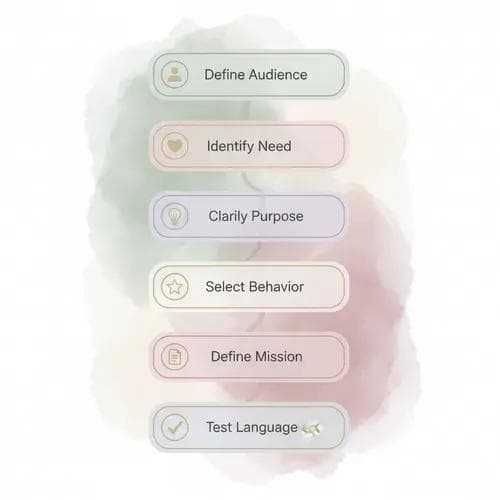
You can use the following process with your founding team, employees, or key partners.
| Step | Exercise | Output ||---|---|---|| 1. Define the audience | Describe the primary customer and the context in which they use the product | One focused customer profile || 2. Identify the need | List the customer’s functional and emotional priorities | Three to five priority needs || 3. Clarify the purpose | Complete the sentence: “Our brand exists to…” | A direct purpose statement || 4. Select values | Choose principles that can guide real decisions | Three to five core values || 5. Define behavior | Explain how each value affects product, service, and partnerships | One practical paragraph per value || 6. Draft the mission | Combine audience, offer, approach, and impact | Two or three mission options || 7. Test the language | Review the statement against actual business decisions | One refined mission statement || 8. Implement | Add values to briefs, reviews, onboarding, and partner communication | A usable internal brand guide |
Do not rush the final wording. A clear, honest draft that reflects the business is more valuable than a polished statement with no operational meaning.
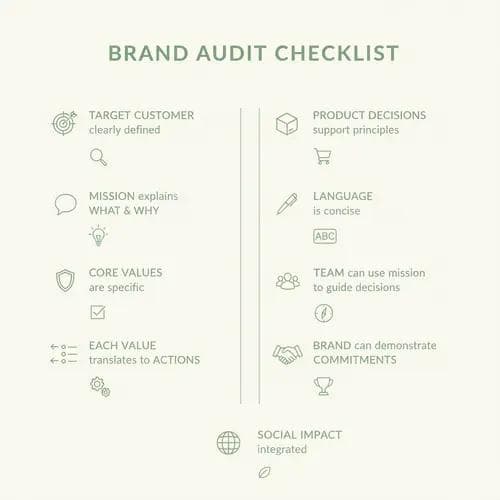
Before publishing or implementing your brand foundation, confirm that it meets the following standards:
When your core values, mission statement, product strategy, and supply chain reinforce one another, your yoga brand becomes more coherent and credible. That clarity helps customers understand what makes the business different and gives your team a stronger foundation for long-term growth.
A clear yoga brand mission deserves products that express it consistently. Whether you are launching a new yoga clothing label, expanding an established activewear range, developing a private-label collection for a studio, or creating merchandise for a wellness community, the right product-development partner can help turn your values into fabric, fit, function, and design.
We support B2B clients with custom yoga wear, private-label production, OEM/ODM development, fabric and color selection, logo and trim customization, packaging solutions, and brand-focused product collaboration. From early concepts and sample development to bulk production, our goal is to help you build a yoga apparel collection that reflects your positioning and meets practical market requirements.
Contact our team to discuss your custom yoga apparel project, OEM/ODM requirements, or long-term brand partnership. Together, we can develop products that make your yoga brand’s mission visible, wearable, and ready for the market.
Good core values depend on the brand’s audience, positioning, and operating model. Common themes include mindful performance, inclusivity, intentional design, product quality, responsible production, transparency, and community. The strongest values are not simply attractive words; they clearly influence how the brand designs products, works with suppliers, communicates with customers, and evaluates partnerships.
A mission statement is usually most effective when it can be expressed in one or two concise sentences. It should explain what the brand provides, who it serves, how it creates value, and why that work matters. Clarity is more important than reaching a specific word count.
Core values can guide fabric selection, fit development, size range, garment construction, color strategy, logo placement, packaging, testing, and quality standards. For example, a performance-focused brand may prioritize secure fit and technical fabric properties, while an inclusivity-focused brand may invest more deeply in size grading, adjustable features, and testing across different body shapes.
With OEM yoga apparel, the client generally supplies the product concept, design, specifications, or tech pack, and the manufacturer produces the garments accordingly. With ODM yoga apparel, the manufacturer may provide more design and development support through existing styles, fabric options, pattern solutions, or customizable concepts. The right approach depends on your internal design capabilities, launch schedule, budget, and desired level of customization.
A manufacturer should ideally be involved once the brand has a defined target customer, positioning, initial product direction, target price range, and expected order quantity. Early manufacturing input can help evaluate fabric choices, construction feasibility, customization options, sampling needs, costs, and timelines before the collection is finalized.
Written by
Dayu
Ready to bring your
yoga brand to life?