In the competitive yoga apparel market, a strong brand identity does more than make your products look attractive. It helps customers understand who you are, what you stand for, and why your yoga wear deserves a place in their wardrobe. When your identity is clear, every touchpoint—from your logo and packaging to fabric selection and garment construction—works together to build recognition and trust.
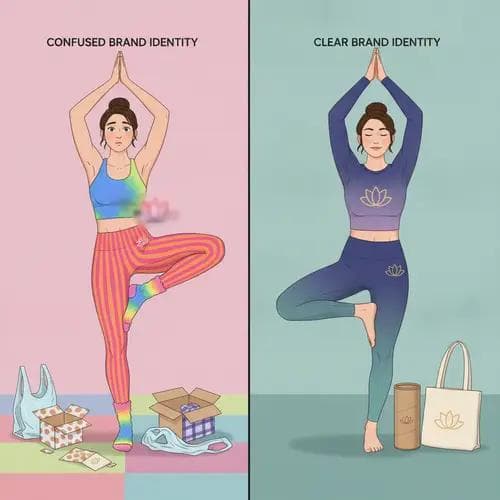
However, many yoga brands unintentionally send mixed signals. Their visual identity suggests premium performance, while their products feel designed for casual wear. Their marketing emphasizes sustainability, but their materials and packaging do not support that message. Their collections may even look as though they belong to several unrelated brands.
This inconsistency can make potential customers hesitate. For retailers, yoga studios, distributors, and private-label partners, it can also raise concerns about whether the brand is ready to scale. The following five warning signs can help you determine whether your yoga brand identity is confusing customers—and show how better brand alignment and custom yoga apparel development can create a clearer market position.
Your yoga brand identity is the complete impression people form when they encounter your business. It includes your brand name, logo, colors, typography, photography, packaging, tone of voice, product design, fabric choices, fit, quality, and customer experience.
For a yoga clothing brand, the product itself is one of the most visible expressions of identity. Customers do not experience your positioning only through marketing. They feel it in the stretch of the fabric, the support of a sports bra, the opacity of a pair of leggings, the placement of a logo, and the quality of the stitching.
A clear identity helps customers quickly understand whether your brand represents technical performance, premium studio-to-street style, inclusive everyday movement, sustainable living, or another distinct position. Confusion begins when these signals do not tell the same story.
| Brand Element | Clear Customer Signal | Potential Source of Confusion ||---|---|---|| Visual identity | Consistent mood, colors, and design language | Different styles across garments, packaging, and marketing || Product range | Recognizable fit, function, and aesthetic | Collections created for unrelated target audiences || Brand promise | Specific benefits supported by the product | Broad claims customers cannot verify through use || Quality level | Materials and construction match the price | Premium pricing paired with inconsistent finishing || Communication | One recognizable voice across channels | Frequent changes in tone, terminology, or positioning |
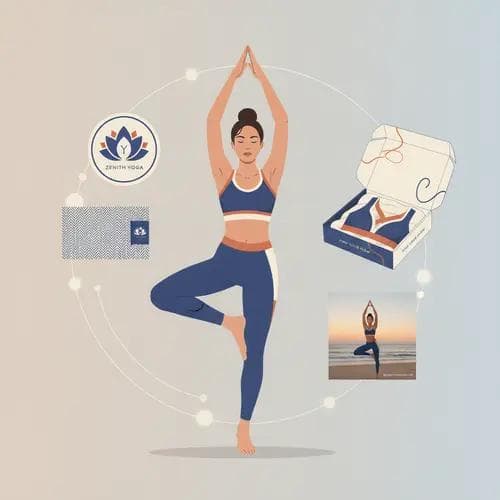
One of the clearest warning signs is that customers understand what you sell but cannot explain why your brand is different. They may describe your business simply as “a yoga wear brand” or “another activewear label.” This usually means your identity is too broad, too generic, or disconnected from a meaningful product advantage.
In yoga apparel, attractive colors and fashionable silhouettes are not enough to create a distinctive position. Customers need a clearer reason to remember you. That reason could be technical performance, refined minimalism, inclusive sizing, seamless construction, responsible material choices, specialized studio wear, or versatile garments designed for yoga and everyday life.
Most importantly, the difference must be visible in the product. If your brand claims to support advanced yoga practice, the garments should demonstrate this through secure waistbands, four-way stretch, smooth seams, reliable coverage, and effective moisture management. If your positioning is premium lifestyle yoga wear, fabric hand feel, color development, fit, trims, and finishing should reinforce that expectation.
A useful test is to ask whether a buyer could recognize your collection without seeing the logo. If the answer is no, your products may not yet have a distinctive design language. Custom yoga apparel development can help translate your positioning into signature silhouettes, exclusive color palettes, recognizable details, branded trims, and carefully selected fabrics.
Your website, campaign photography, packaging, and logo may create one expectation while the actual yoga clothing creates another. This disconnect is a major source of customer confusion because buyers expect the product experience to match the brand presentation.
For example, a brand may use elegant typography, muted colors, and sophisticated studio photography to communicate a premium identity. If the garments then arrive with basic fabric, lightweight packaging, uneven stitching, or generic private-label designs, that premium impression quickly disappears. The opposite can also happen: a technically advanced product may be presented through casual visuals that fail to communicate its performance value.
This problem often develops when branding and product sourcing are treated as separate activities. A creative team may design an elevated identity without considering manufacturing requirements, while a purchasing team may select existing styles mainly on cost or availability. The result is a collection that carries the brand logo but does not truly express the brand.
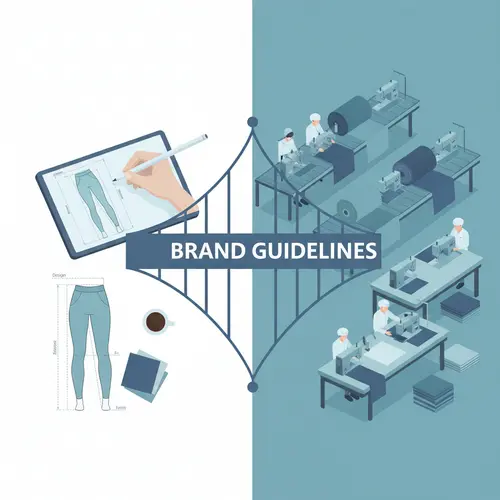
To correct the disconnect, product development should begin with a clear brand brief. It should define the target customer, intended use, price position, visual mood, performance requirements, preferred materials, fit standards, color direction, and signature details. An experienced yoga wear manufacturer or OEM/ODM partner can then turn these strategic choices into practical garment specifications.
When visual identity and product design are developed together, the brand becomes more credible. Logo placement feels intentional, the fabric supports the market promise, and every style belongs to the same recognizable collection.
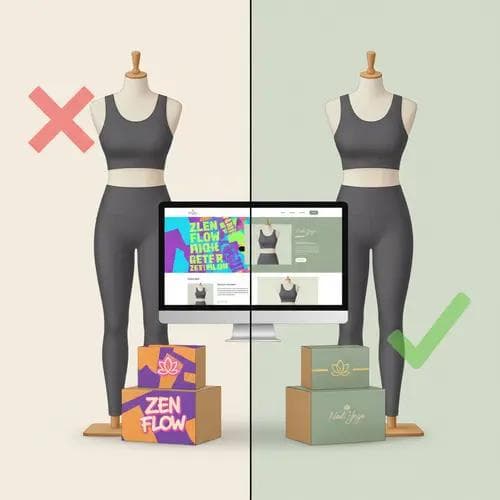
Experimentation is healthy, but constant reinvention can weaken recognition. If every collection uses a different aesthetic, target customer, fit concept, color system, and product category, customers may struggle to understand what your brand represents.
A yoga brand might launch soft neutral studio essentials in one season, bright gym-focused sets in the next, and fashion-led athleisure shortly afterward. Each collection may be attractive on its own, but together they can create a fragmented identity. Retail buyers may also find it difficult to decide where the brand belongs within their assortment.
Consistency does not mean repeating the same products indefinitely. Strong brands evolve while preserving a core design language. This may include a signature waistband shape, recognizable seam placement, a consistent fit philosophy, distinctive color blocking, a specific fabric hand feel, or a carefully controlled palette.
The solution is to build a product architecture rather than develop isolated styles. Core products should express the most recognizable elements of your brand and remain available long enough to build customer familiarity. Seasonal launches can introduce new colors, fabrics, details, or silhouettes without abandoning the established identity.
For brands working with a custom yoga clothing manufacturer, a structured development process makes this easier. Shared measurement standards, approved fabric libraries, color references, construction guidelines, and quality requirements help maintain continuity across seasons and repeat orders. This consistency becomes especially valuable when the business expands into wholesale, studio partnerships, or international distribution.
Statements such as “made for every movement,” “premium quality,” or “designed for modern women” may sound positive, but they are often too broad to guide customer expectations. When many competing yoga brands use similar language, these claims become difficult to own.
Confusion becomes more serious when the product does not support the promise. A brand may emphasize sustainability but provide little evidence through its material choices, packaging, durability, or production approach. Another may claim professional performance while offering garments that lack sufficient support, recovery, breathability, or coverage for demanding practice.
A credible brand promise should be specific enough to influence product decisions. A brand serving yoga studios and instructors may prioritize durable fabrics, stable fits, long-wear comfort, and coordinated team customization. A fashion-conscious label may focus on sculpting silhouettes, sophisticated colors, premium hand feel, and versatile layering pieces. A brand centered on accessibility should treat inclusive sizing and consistent grading as core development priorities rather than afterthoughts.
Your brand promise should also help you decide what not to produce. A focused performance label does not need to follow every lifestyle trend, while a refined minimalist brand does not need to introduce every popular print. Clear boundaries make the identity easier to understand and can make product development more efficient.
Before approving a style, ask one question: does this garment provide evidence for our brand promise? If the answer is unclear, the style may need different materials, construction, fit, detailing, or positioning.
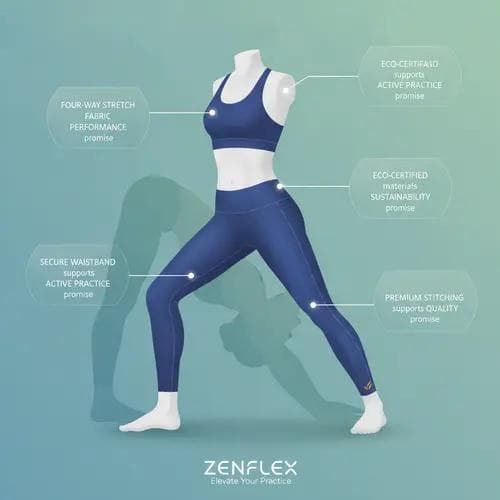
When customers or wholesale buyers repeatedly compare your products only by price, your value may not be communicated clearly enough. Price pressure is not always a sourcing problem; it can also be a brand identity problem.
If your leggings appear similar to many alternatives, buyers will naturally compare them based on cost. A stronger identity gives them additional reasons to choose your product, such as a better fit system, a distinctive fabric, exclusive design details, reliable quality, clear target positioning, or a cohesive retail story.
This issue is particularly important for emerging yoga apparel brands using generic ready-made products. Standard styles can help test a market, but relying on them for too long may make it difficult to build defensible brand value. Competitors can offer similar silhouettes, and customers may see little reason to remain loyal.
Custom yoga apparel creates opportunities to move beyond direct price comparison. Even focused changes—such as refining the waistband, adjusting pocket placement, developing a signature back design, selecting a more suitable fabric weight, creating custom colors, or adding branded trims and packaging—can make a collection feel more intentional.
For B2B customers, perceived value also depends on operational consistency. Accurate sizing, dependable quality control, repeatable colors, stable production, clear specifications, and coordinated packaging all contribute to the brand experience. A product that looks strong in marketing but varies between orders can quickly undermine trust with distributors, retailers, and consumers.
If several of these warning signs feel familiar, the answer is not necessarily a complete rebrand. In many cases, the identity can become clearer by aligning strategy, design, and manufacturing around one defined customer promise.
Start by identifying your primary audience and the situation in which they will use the product. A studio owner ordering branded uniforms has different priorities from a fashion retailer, an online startup, or a performance-focused yoga label. Your product range, customization level, minimum order strategy, pricing, packaging, and communication should reflect the audience you most want to serve.
Next, define the product codes that should remain consistent across your collection. These may include fit standards, preferred fabric qualities, construction details, logo applications, color rules, and packaging presentation. Documenting these elements creates a practical brand system that can guide designers, suppliers, manufacturers, and marketing teams.
Finally, involve your manufacturing partner early. A capable OEM/ODM yoga wear supplier can evaluate technical feasibility, recommend suitable fabrics and construction methods, develop samples, refine fit, and create production specifications that preserve the intended brand identity at scale.
A recognizable yoga brand is built through consistent decisions. Your visual identity, product performance, materials, fit, quality, packaging, and communication should all reinforce the same market position. When these elements work together, customers understand the brand faster, buyers can present it more confidently, and every new collection strengthens recognition rather than starting again from zero.
If your business is developing a new yoga apparel line, refreshing an existing collection, or preparing to scale into wholesale markets, the right product partner can help turn your brand strategy into commercially viable garments.
Contact us to discuss custom yoga apparel, private-label production, OEM/ODM development, fabric and color selection, sampling, branded packaging, or long-term yoga wear brand cooperation. We support B2B clients in creating cohesive collections that reflect a clear identity, meet target-market needs, and provide a reliable foundation for sustainable business growth.
A yoga brand identity is the complete set of visual, verbal, and product-related elements that shape how customers perceive a yoga business. It includes the brand name, logo, colors, tone of voice, photography, packaging, garment design, fabric, fit, quality, and overall customer experience. For a yoga apparel company, the clothing itself is a central part of that identity.
Custom yoga apparel allows a brand to create recognizable product features instead of relying entirely on generic market styles. Signature silhouettes, exclusive colors, distinctive seam lines, custom waistbands, branded trims, logo applications, and consistent fabric choices can make a collection easier to identify and less likely to be compared only by price.
OEM yoga wear production generally involves manufacturing garments according to the client’s designs, specifications, or technical packages. ODM services usually provide more product development support, which may include existing design options, trend direction, material recommendations, style modification, sampling, and production. The right model depends on the brand’s design resources, timeline, customization requirements, and market strategy.
A yoga brand should involve a manufacturer as early as possible once the target customer, price position, product concept, and basic design direction are defined. Early collaboration helps evaluate fabric suitability, construction feasibility, fit, customization options, cost targets, sampling requirements, and production planning before too much time is invested in designs that may be difficult to manufacture.
Consistency can be maintained through documented brand and product standards. These may include measurement specifications, fit blocks, approved fabrics, color references, logo placement rules, construction requirements, packaging guidelines, and quality-control criteria. Keeping a stable group of core products while introducing controlled seasonal updates also helps the brand evolve without losing recognition.
Written by
Dayu
Ready to bring your
yoga brand to life?